Friday, January 19, 2007

Talk talk

Say you’re writing (or rewriting or editing!) a realistic novel, and once they’ve gone home for the evening, two characters – girls around eleven – best friends – have matters to communicate. How do they do it? And what do you, the author, tell readers about the devices they use?

Sometimes I’m tempted to give characters things I don’t have myself, like one of these


but in this case, I’m not going to do that. I don’t want to name a brand, nor do I want to date the book. Who knows what we’ll be communicating with in ten or twenty years? I hope my books will be around longer than that. When we were editng Blow Out the Moon, I suggested putting the letter To Anyone Who Has Read This on my Website instead of at the back of the book. Alvina said no, "I hope people will be reading this book when we're dead and gone." I hope so, too: that book and this new one. That's what I want: to write something that becomes a well-loved classic. (Just a modest little goal!!)


Someone once said that one reason Jane Austen hasn’t dated is the LACK of detail in her books. Of course, I am not saying I am like her, and she’s got a lot more going for her than lack of details about objects, but it is true that she rarely mentions, let alone describes, the kind of details that are such a big deal at one time in history and non-existent in another (like pattens – she wore them but I don’t think they ever show up in her novels).


She probably didn’t mention them because those kinds of details weren’t essential to her story….and maybe my girls’ communication devices aren’t essential to THEIR story, either; but they do have a lot to say (and not just to each other, they need these things to make their plans!). I have given them cool little devices they talk into, and type into….I just don’t know what to call them. Any suggestions? I’m at the plain hard work part of rewriting the book and I need to decide these kinds of things, or just wimp out and say “phone” or “computer” or make up a word.


Or maybe it would be better to just have the girls write or talk to each other and not say how they did it -- not name or describe the devices at all? That's how it is now and maybe that's how it should stay. What do you think?


POETRY FRIDAY: The What and Why of Poetry

I guess any of you who are regular readers of the Blue Rose Girls blog must have figured out by now that I am an avid poetry enthusiast. I love both children's and adult poetry. I believe poetry should live in the lives of children from the moment they are born. I think they should grow up having nursery rhymes and poetry read and recited to them at home and at school.

I often go searching through books to find quotes about the importance of poetry in our lives and poems that speak to the essence of what poetry is. Today, I'd like to share some prose and poems about poetry.

Before I give you two poems that attempt to explain WHAT poetry is, I’d like to provide reasons for WHY we should read poems. First, I quote from Donald Hall’s “To the Student” that appears at the beginning of the second edition of his book TO READ A POEM. Second, I provide a quote from Lee Bennett Hopkins’ introduction to SIDE BY SIDE: POEMS TO READ TOGETHER.

Here is the excerpt from Hall's TO READ A POEM:

When we learn to read poems, we acquire a pleasure and a resource we never lose. Although literary study is impractical in one sense—few people make their living reading poems—in another sense it is almost as practical as breathing. Literature records and embodies centuries of human thought and feeling, preserving for us the minds of people who lived before us, who were like us and unlike us, against whom we can measure our common humanity and our historical difference. When we read our contemporaries, they illuminate the world we share. Whatever we claim for literature in general we must especially claim for poetry, which concentrates the virtues we attribute to drama and fiction. If we learn to read poems first, we will begin the study of literature as literature itself began—with the most concentrated and intense of utterances.

When we read great poetry, something changes in us that stays changed. Poetry remembered becomes material to think with, and no one who has absorbed Shakespeare or Keats is quite the same again. Reading poetry adds tools by which we observe, measure, and judge the people and the properties of our universe—inside and out.

I would say Donald Hall, the current Poet Laureate of the United States, gives us good reasons for reading poetry. Now let's hear from Lee Bennett Hopkins, one of America's most highly esteemed anthologists of poetry for children. He has traveled throughout the United States and spent time sharing poetry with children of all ages.
Here is the excerpt from Hopkins’ SIDE BY SIDE: POEMS TO READ TOGETHER:

Poetry comes naturally to those discovering the magic of language. Pictures develop in young minds, stretching imaginations, evoking fresh visions, generating smiles, reflections and satisfaction.

Poetry should flow freely in the lives of children; it should come to them as naturally as breathing; for nothing—no thing—can ring and rage through their hearts and minds as does this body of literature.

Those are some reasons for WHY we should read and share poetry. Now here are two of my favorite poems that attempt to explain WHAT poetry is:


POETRY
by Eleanor Farjeon

What is poetry? Who knows?
Not a rose, but the scent of a rose;
Not the sky, but the light in the sky;
Not the fly, but the gleam of the fly;
Not the sea, but the sound of the sea;
Not myself, but what makes me
See, hear, and feel something that prose
Cannot: and what that is, who knows?


PROSE AND POETRY
by Eve Merriam

You can be immersed in good prose, like swimming
in a lake on a warm summer afternoon.

In poetry
the ice-cold moon
drops down
into the lake,
melts
to surround you,
and then
together
you fly back home
to the sky.


If you would be interested in reading more poems about poetry, I recommend the following book:


INNER CHIMES: POEMS ON POETRY
Selected by Bobbye S. Goldstein
Illustrated by Jane Breskin Zalben
Published by Wordsong/Boyds Mills Press (1992)

This is a lovely themed collection of poems about poetry. It contains works by well-known and award-winning poets—including Eve Merriam, Eleanor Farjeon, Karla Kuskin, Lilian Moore, and X. J. Kennedy. Zalben’s unimposing watercolor illustrations complement the poetry. In Judy Freeman’s brief review of the book at Judy Freeman’s 40 Favorite Poetry Books for Children, she writes: “This elegant collection of 20 poems, accompanied by meticulous watercolors, is just what you need to explain the miracles of verse.”


A Few Poetry Links for Poetry Friday

Judy Freeman’s 40 Favorite Poetry Books for Children

Poetry by Eleanor Farjeon at Old Poetry

Three Poems by Eve Merriam at the Academy of American Poets website, poets.org

Wednesday, January 17, 2007

Congratulations to US!

It's January 17th, so we thought we'd do a belated year in review. It's been a great and successful year for all us Blue Rose Girls:

Meghan's ALIENS ARE COMING was (and still is) a super hit:

•One of SLJ's Best Books of 2006!
•Kirkus Reviews 2006 Editors Choice
•NYPL 100 Titles for Reading and Sharing 2006
•American Booksellers for Children top pick for 2006
•starred Kirkus Review
•starred SLJ review
•reviewed in the New York Times
•one of the five finalists for a Cybils nonfiction picture book award

Grace's YEAR OF THE DOG also acheived acclaim:

•2006 Booklist Editors' Choice for Middle Readers
• Kirkus Best Early Chapter Books 2006
• 2006 National Parenting Publications Awards (NAPPA) GOLD Winner
• 2006-2007 Texas Bluebonnet Award Masterlist
• 2007 Nene Awards Recommended List (Hawaii's Book Award Chosen by Children Grades 4-6)
• NYPL 100 Titles for Reading and Sharing 2006
• Starred Booklist Review
• 2007 Cochecho Readers' Award List (sponsored by the Children's Librarians of Dover, New Hampshire)

Anna signed up new projects such as:
• PRISCILLA AND THE HOLLYHOCKS, Charlesbridge, to be released Spring 2008
•WHAT CAN YOU DO WITH ONE RED SHOE, Henry Holt


Libby celebrated the paperback release of BLOW OUT THE MOON
* the winner of the Massachusetts Book Honor 2005
• NYPL 100 Titles for Reading and Sharing 2004
• Starred Booklist Review


Linda released her sixth illustrated book, WHAT COULD BE BETTER THAN THIS written by Linda Ashman


Alvina's list of edited books was full of amazing and highly successful gems including: NOTHING BUT THE TRUTH AND A FEW WHITE LIES, CHOWDER, THE SOUND OF COLORS, HIPPO! NO, RHINO, and FIREGIRL. She's got a whole new list that looks just as wonderful, if not more...


And Elaine discovered the joy of blogging, being on the CYBIL nominating committee and a new outlet to share her love of poetry to the world.

All in all, a pretty good year!

THE BURDEN OF BLOGS


My personal blog is back in action!

Since I've been so involved with this, my personal blog has been neglected. Sob. Yes, I know you are all upset too... but don't be! I've posted once again.

www.meghan-mccarthy.com/firesidechat.html

What, perhaps, you are wondering does this have to do with THIS blog. Well, not much. Or does it? I was thinking the other day about blogs. They are still new…and growing fast! In the past, publishers sent F&Gs and galleys to magazines, etc., for review. What are they starting to do now? Send proofs to the important bloggers. This is new! And amazing! Now anyone can have a voice and I think it's great. Just look at the Cybils--important stuff folks!

However, there can be some tricky things to think about. Just look at what happened with the Rosie vs. Trump feud--it started with a comment she made on her blog. Blogs can be very personal. After all, they're usually written within the confines of a comfortable setting. My blog writing is my alone time. I feel as though I'm writing to myself sometimes. I forget about the people who read it. This can be good and bad. Sometimes I forget to watch what I say. Maybe we should all be watching what we say. What will our publishers think? Do they like that we talk about our book work? Do they hate it? Would they rather we not say certain things? And what about editors--what do their bosses think? Are they revealing too much?

There's a fine line and sometimes I admit that I cross it. Other people cross it too. But you know what? That's what makes blogs exciting and great! No one would read them if they were too carefully constructed and thought out. No one would read them if there were spin-doctors at work.

That's all I have to say for today. Do you think blogs are getting out of control? Do you like them the way they are? Speak up!

Meghan

Question of the week: picture book manuscripts

It's been quite a while since we've answered a question of the week (this was our last one), and we're ashamed to say that this question was asked a long long time ago. But better late than never!

If you'd like to send us a question of the week to answer, feel free to put it in the comments section below, or email us at bluerosegirls at gmail dot com.

How do you read, evaluate, and think about picture book manuscripts?

This question may be answered by all of us throughout the week, so keep checking back!


ALVINA:
When I review manuscript submissions, I look for beauty in the writing, whether it makes me laugh, moves me, if the characters come alive, and most of all, if it surprises me--if the concept is original. I also consider whether I can envision what the illustrations would look like, if I can see the finished product in my head, if there are good illustrative possibilities. But as our company has cut back a bit on the picture books we publish, originality really is a key. Will this book stand out in the market? Would I pick it up as I scanned the shelves in the bookstore? I also look to see if there's a "hook" in the text--can it be promoted with a holiday or event, such as back to school or Valentine's Day? That's always a plus. It's also partly a gut reaction (a "blink" if you will).

In addition, I do have many illustrators that I work with or would love to work with, and I'm always keeping an eye out for a text that would match their style, so that comes into play, too.

ANNA:
When I am sent a manuscript to consider illustrating, I look for a tone that is similar to some aspect of my illustration approach and style. Something that I think will merge well with my work, a quality that inspires me, makes me itchy to draw. Usually I can tell right away if its something I want to work on. There has to be some aspect of the storytelling (subject, description, style) that relates to my vision as a visual storyteller.

GRACE:
These days I don't do too much illustrating for other authors; I've found writing and illustrating my own work incredibly rewarding and hard to let go of. Usually I only consider illustrating someone else's story if 1)it's a person whom I know is sensitive to my style and is used to my visual voice 2)the story is great something I wish I had written myself 3)it's a story that lends itself well to my particular style 4) I feel a real connection to the words and subject matter. The last is probably the most important.

MEGHAN
I look for text that flows well from one page to another…text that maintains my interest…and text that has a good arch. An author/illustrator's MS will look different because an illustrator can (and should) put part of the story in the art. It's hard to come up with something truly original--most stories are bits and pieces from others--but I also want to see originality. For me, doing nonfiction gives me that opportunity. I'm writing about something that really happened! I like to pick out quirky stories that people wouldn't normally think would make for a good kids' story. I am always on the hunt for original, funny, and different ideas. That's what it's all about! When I buy a book I know I love it. I can usually tell after the first quick read. You should know whether you like something instinctually--don't over think it!

Tuesday, January 16, 2007

Palette paintings

Sometimes when I'm painting I start to get more interested in whats going on in my palette than in my painting. Maybe this is a form of procrastination. Or maybe making narrative art sometimes leaves you yearning for abstraction? Either way I like taking pictures of the little accidental paintings...


Monday, January 15, 2007

A sneak peak at what I'm editing now

Another question from my personal blog that I'll answer here, this one courtesy of Katherine Tillotson.

What books are you editing that you are currently excited about?

Right now I'm working mainly on my Spring 2008 list, and although that list is yet to be finalized, three of the books that I hope to make it on that list that I'm excited about are:

A middle grade novel by Tony Abbott (author of Firegirl): this book is still untitled, although it might be called some combination of The Postcard or Twin Palms. Except for the stellar writing and kidlike dialogue, this book is nothing like Firegirl, but I love it just as much. This one is a mystery, set in Florida, and involves a wacky cast of characters, mysterious phone calls, clues in the form of postcards, and a story-within-the-story. It's an ambitious, compelling novel, and it's different from anything else I've edited. I'm really happy with how it's coming along, and I'm excited for people to read it soon.

Wabi Sabi by Mark Reibstein, illustrated by Ed Young. This picture book will either be on the Spring/Summer 2008 list, or on Fall 2008. It's been such an honor and pleasure to be working with Caldecott Medal-winner Ed Young, and I love the concept: wabi-sabi is a Japanese philosophical concept where you find beauty in the ordinary, in nature, in imperfection, such as worn, chipped pottery, a damp pile of fallen leaves and dirt, and, in the case of this book, an ordinary cat with mottled fur. Although the concept is somewhat sophisticated, the story is lyrical, fun, and kid-friendly, and the art is magnificent.

Sergio Makes a Splash by Edel Rodriguez. I had been wanting to work with Edel for almost five years now, ever since I discovered that we worked in the same building, I sent him an email, and he came to show me his portfolio. At the time, I was only familiar with his picture book biography-style of art, and his editorial work, which I loved, but when I received this proposal last year about a little penguin from Argentina named Sergio, I was delighted. The art style was simpler, more graphic, yet just as wonderful, and the office fell in love with the character and personality of little Sergio.


So, stay tuned for news on these three books! But if you can't wait over a year, here's a quick list of some of the titles I have coming out this Winter/Spring. I will probably be writing more about them later, so for now I'll just include a quick description:

Rubber Houses by Ellen Yeomans: A breathtaking novel-in-verse about the devastation a death in the family bring to a teen girl and her parents. This is just out now.

Flush: The scoop on poop throughout the ages by Charise Mericle Harper: An informative, zany follow-up picture book to Imaginative Inventions about everything bathroom-related: who invented the toilet, how astronauts go to bathroom in space, what people throughout history have used as toilet paper, and much, much more! This is coming out in March.

Going Nowhere Faster by Sean Beaudoin: Hilarious Young adult novel about a genius video store clerk who everyone thought would Go Somewhere and Be Something, but guess what--he's going nowhere faster. I call this Clerks meets Good Will Hunting. Coming out in April.

Call Me Hope by Gretchen Olson: Poignant middle grade novel about a young girl dealing with her verbally abusive mother. Coming out in April.

Eggs by Jerry Spinelli: A quirky middle grade novel about an unlikely friendship between two fragile children who are missing something in their lives. Coming out in June.

Sunday, January 14, 2007

Care to Share?

As time for the announcement of the winner of the Caldecott Medal will soon be upon us—I started thinking today about the illustrated children’s books that I bought last year. Here are seven of the books I added to my personal collection that I think are among the best-illustrated books of 2006.


ADELE & SIMON
Written and illustrated by Barbara McClintock


MOON PLANE
Written and illustrated by Peter McCarty


BLACK? WHITE! DAY? NIGHT!: A BOOK OF OPPOSITES
Written and illustrated by Laura Vaccaro Seeger


WINTER IS THE WARMEST SEASON
Written and illustrated by Lauren Stringer


YOON AND THE CHRISTMAS MITTEN
Written by Helen Recorvits
Illustrated by Gabi Swiatkowska


AN EGG IS QUIET
Written by Dianna Aston
Illustrated by Sylvia Long


YELLOW ELEPHANT: A BRIGHT BESTIARY
Written by Julie Larios
Illustrated by Julie Paschkis


Would you care to share the titles of the books YOU think have earned a place among the best-illustrated children's books of 2006?

Saturday, January 13, 2007

making literature, making a living

More often then not, when I'm introduced at a book event I'm described as a prolific author/illustrator. While it is usually meant as complimentary (at least I hope so) I always wince a little inside. Just because a person (especially someone in the creative field) creates many works doesn't necessarily mean they are any good.

Of course, I am extremely grateful that I have been able to be so prolific. But the truth is, I have to be. I depend on it. If I don’t produce, I quickly drown--mortgage, health insurance, medical bills, groceries-- everything breaks through the rickety dam of my paying books.

Which is probably why I was so affected by Linda Sue Park’s speech about creating your best work . I didn’t go into children’s books for the money (who does?); and it goes without saying that I want everything that I do and publish to be the absolute best of my ability. But I would be lying if I didn’t say that sometimes my creative juices flow out of desperation for the cold hard cash, that compromises are made to get contracts, and sometimes work is rushed when bills are waiting.

To be able to make a living in children’s books is a gift, but one that is dearly paid for. And is compromising quality one of the unavoidable taxes? That is the question I struggle with when the projects are over and the bills have been paid. Could I have done it better? Should I have done it better? Was it my very best?

The answer is always yes and no. Everything I’ve done probably could’ve been done better. But it was the very best I could do at that time. And while that’s not quite satisfactory, it’s enough to make me try again with another book.

Friday, January 12, 2007

And now, a confession...


Dear Readers,

I will now explain my "vote for the best cover" post and will reveal which cover(s) I did.

How it started--
I made a cover. My publisher made a version of the cover. I didn't care for theirs. I made a few modifications and sent it back. They didn't like it. I did another. They didn't care for that one either.

Here I will interject that this is what making a book is all about--lots of back and forth... lots of compromise. You don't always get what you want!

This time, however, I wanted to get what I wanted. I was SURE I was right. I thought my design was better. My publisher thought theirs was.

This is when I decided to do something bold and new--post the covers on the net and let people vote. The votes came in. The top cover is the one my publisher wants to use. The 2nd one is the image I want most. The 3rd is my 2nd favorite (also created by yours truly).

As of now my publisher will be printing image number one with a few changes. I asked for the bird to be moved more over the type (so that it doesn't look like a huge accident) and that will happen. None of my other requests will most likely occur. Does this make me sad? Sure. But this is what happens. This is what publishing is all about. I must say that all of the interiors are the way I wanted them... so right there, I can't complain. For the most part I got what I wanted. Do I still think I'm right about the cover? You betcha!

Perhaps some of you are wondering why I decided to become the BIGGEST PAIN IN THE BUTT AUTHOR/ILLUSTRATOR EVER. (I'm sure no editor, designer, publisher likes their author posting images to vote on, on a blog)

Here's why--
1) When everyone at a publishing co. is SO SURE that my design isn't right I start to question my skills as an artist. Thoughts run through my mind--am I losing "the touch"? Am I not in line with the way most people see things visually? Was all my artistic training for nothing?

2) Perhaps, I thought, a vote in favor of mine would change some minds.

3) Perhaps, I thought, a vote against mine would change MY mind.

4) I wanted to learn more about why my publisher wanted cover #1. I honestly couldn't understand it. I still don't... but I'm a little closer and that's a help!

5) I get too close to things. When ALL I DO is work on a book I lose sight of what's important. I start to think that whatever I'm knee-deep in is THE MOST important thing. Perhaps the cover type and color the way it is in #1 isn't going to ruin the book as I'd convinced myself it would.

So there's my confession. I thank you all for taking the time to participate. I hope you learned something! I know I did.

Meghan

POETRY FRIDAY: Singing and Swinging with Children's Poetry

I was not the type of teacher or school librarian who believed in having students view videos on a regular basis--or even when I was suffering with a severe migraine headache. I always preferred reading the written word to and discussing literature with children--rather than letting them veg out in front of a TV monitor while I busied myself with another task. To be sure, I used a number of the excellent nonfiction videos we had in our school collection when I was teaching units in science and social studies. But why show a video of a picture book or a work of fiction when you can actually read the book itself? There were times, though, when I did show a video of a book after I had read the book to my students. (THE MOUSE AND THE MOTORCYCLE, which is a great video, is an example.)


ANTARCTIC ANTICS: A BOOK OF PENGUIN POEMS
Written by Judy Sierra
Illustrated by Jose Aruego & Ariane Dewey
Published by Gulliver Books/Harcourt Brace (1998)


I will admit that I found some videos that were every bit as good as the books upon which they were based. Today, I am going to write about one of those videos--and it just happens to be based on one of my favorite books of children’s poetry, Judy Sierra’s ANTARCTIC ANTICS: A BOOK OF PENGUIN POEMS. If you liked the book, you’ll love the video. The 2001 recipient of the Andrew Carnegie Medal for Excellence in Children’s Video, it’s about as good as children’s videos get...and it's a delight from start to finish. I give it my highest recommendation--my own two thumbs up! (Note: Paul R. Gagne received the medal for Weston Woods, producer of the video.)


Here is an excerpt of the statement from the Carnegie Medal pages at the ALSC website describing the ANTARCTIC ANTICS video: “…transforms the poetry of the book into ballads of the penguin world. Playful animation and original musical compositions enliven the tone of each poem and endearing penguins have wide appeal and unforgettable personalities, leaving viewers with warm feelings for the coldest place on earth.”

Yes, the poetry from this popular book was put to music! The poems make wonderful song lyrics--and the musical score composed by Scotty Huff and Robert Reynolds is terrific. I purchased a copy of the video to show to the students in the children’s literature course that I teach. Often, several students leave the class session when we view the video singing some of the "penguin" tunes.

The ANTARCTIC ANTICS video was animated by FableVision Studios. (Kudos to FableVision for retaining the artistic style of illustrations created by Jose Aruego and Ariane Dewey for the picture book.) The video was directed by Gary Goldberger and Peter Reynolds. You know Peter Reynolds. He’s the author and illustrator of ISH and THE DOT and illustrator of the popular Judy Moody series written by Meghan McDonald. Peter also happens to be the founder and president of FableVision Studios.

You can view a video clip of ANTARCTIC ANTICS at the Weston Woods/Scholastic website.


About the Book: ANTARCTIC ANTICS is a book of light-hearted rhythmic and rhyming poetry about "the real lives and habits of emperor penguins" and of their time spent on the coldest continent on earth or in the icy waters surrounding it. Some of the poem titles include A Hatchling's Song, Regurgitate, I Am Looking for My Mother, My Father’s Feet, Belly Sliding, and Be My Penguin—a love poem. It also contains three predator riddles about the killer whale, the leopard seal, and the skua bird.

My elementary students loved this book. They enjoyed memorizing and reciting the poems in class and in the library. And after viewing the video, many of them even began singing the poems.

In the introduction to Karla Kuskin's NEAR THE WINDOW TREE, a book of children's poetry, the author writes: "Make poetry accessible to children and they will have a form of self-expression as satisfying as singing or shouting." The poetry in ANTARCTIC ANTICS is definitely accessible to young children...and it's tailor-made for joyful singing.

Thursday, January 11, 2007

A Request from Janet Wong


Now…I really hate “talkin’ trash” on the Blue Rose Girls blog—but I just got an email from Janet Wong asking me if I would help spread word about The Dumpster Diver’s Junk Is Good contest being sponsored by All for Kids Books in Seattle.

There are two categories in which contestants may submit entries: Build It and Imagine It.
The top prize in each category is a school visit from Janet Wong. A visit from Janet is a great prize. She is a dynamic presenter!

Contest deadline is March 31, 2007.

For information about the contest, go to Junk Is Good.


THE DUMPSTER DIVER
is a picture book that Janet wrote.
It will be published by
Candlewick Press in March.

Wednesday, January 10, 2007

Fatal Distraction

In Meghan’s “no resolutions for me” post, she lists her best “thinking” spots and asks readers to tell about theirs. Her query led me off on a tangent—not about places and times when writing ideas bubble up to the surface of my consciousness, but about my actual process when I go about writing my blogs.

So here it is:
The Id, the Ego, Those Infernal Impulses, and the Elements of Style

I love children’s poetry. It would follow that I also love children’s poetry books. Because I love children’s poetry books—I buy children’s poetry books. I have lost count of how many I own—but you can believe me when I tell you that I have hundreds of them. The same holds true for picture books—and all other kinds of children’s books. I don’t have to run down to the public library or visit a school library to find children’s poetry books or picture books or any other kind of books to review. One might think that having so many books at hand would make writing for a children’s literature blog easy for me. Think again!

There are two things I find difficult to do each week: decide what to write a blog about for Friday—and then to write a blog about it. At the beginning of my brainstorming process, I always end up asking myself lots of “Should I?” questions.

Should I review a poetry book that is hot-off-the-press?
Should I write about a wonderful book that was published years ago that has not found the readership it deserves?
Should I write an in-depth review of just one poetry book?
Should I review two or three books?
Should I review picture books written in verse—or picture books with lyrical texts?
Should I go searching for another old moldering poem that’s stuffed inside one of dozens of folders?
Should I write something serious and thought-provoking?
Should I don my wise guy persona and write a funny post?
Should I write something personal about the way poetry has affected my life?
Should I write about a controversial subject in the hopes of getting a discussion going?

Should I? Should I? Should I?

Next, the figurative gears in my gray matter start turning. There are times when I get so many ideas they all buzz around in my brain like bees flitting from flower to flower in search of nectar in summertime. And then I think: “This is a good idea for a blog. No, wait…this is a better idea.” And as the ideas spark electrical impulses in my frontal lobes and my left hemisphere sends messages to my right hemisphere and my right hemisphere signals “Right back at ya, Lefty” via my corpus callosum, I start pulling books off shelves and putting them on the table: a pile of moon books here, a book of poetry for very young children there, a bunch of snow stories written in verse at one end, poetry books that are beautifully illustrated at the other end, and on and on and on… Soon I am overwhelmed with different kinds of books and can’t see the top of the table, can’t decide which book(s) to write about. Then I invariably ignore the books I have spread across the tabletop and write about something else that has captured my fancy just before I sit down to compose my post.

Sometimes, after I finally decide what to write my blog about, everything in the writing/reviewing process goes smoothly from start to finish. Other times, I will spend a day or two on a post and then decide that it stinks or that it didn’t say what I really wanted it to say or that it would be better to post it on some Friday in the future. Sometimes I’ll find that the piece I am working on takes me where it wants to go—not where I want to take it. Sometimes another idea—or several ideas—will pop into my head after I have nearly finished my blog for the week.

I really do envy people who live their blogging lives in a straight line. They get one idea at a time, sit down and write about it, and post the piece the same day. No questions reverberating inside their craniums. No second-guessing their topic choices. No little nerve impulse gremlins jumping synapses in their brains and steering their conscious thoughts away from the writing task at hand or tempting them with new ideas. No little monologue bubbles hovering above their heads like rain clouds in April, whispering to them, and distracting them. Me? I try to remain on track—but I usually end up a modest train wreck of a writer almost every time I sit down to compose a post. So I think: Maybe it would be a good idea for me to write a book about my affliction and call it “Fatal Distraction: The Saga of a Kidlit Blogger with an Attention Disorder.” (Do you think any human being on the planet would be interested in reading a book like that?)

I believe that the mental health community should begin training special therapists who would be qualified to give advice to bloggers like me. Yeh, I could really use a bloggochologist—or maybe a bloggochiatrist. You know…someone knowledgeable about the inner workings of the human brain and psyche and subconscious who is also wise in the ways of topic sentences and paragraphing, main ideas and the clever turn of phrase, the independent clause and the pregnant pause, the ellipsis and the syllepsis, the subjunctive mood and gerunds. Someone who can distinguish an oxymoron from a blogging moron. Someone who is familiar with the works of Dr. Freud and Dr. Seuss. Someone who can make sure I don’t split literary hairs…or infinitives. Someone who can help me learn how to remain focused while I am writing and who can also keep me from dangling my participles in public.

If you know of any such professionals who would be interested in helping an old lady with ADBD— Attention Distraction Blogging Disorder—and also in collaborating on a nonfiction book about the disorder, please leave their names in the comments section for me.

Thanks for listening to my writing process rant, fellow bloggers. May Freud, no Jung, no Freud be with you.

And in other book news...

Check out a preview for my book coming out this summer here--

www.meghan-mccarthy.com/strongman1.html

the cover vote continues...

Dear blog readers--

Keep voting! And thanks for doing so.

I find everyone's comments to be quite interesting and helpful. Soon we all will know which cover goes to print. Don't worry, I'll announce it here.

Don't forget about "Drink Night" this Thursday! January 11th, Sweet and Vicious, 6pm--thanks to Fuse #8!
(fusenumber8.blogspot.com)

Stay tuned for some City Hawk bloopers. As usual, I turned in the artwork with some parts not quite finished. Oops!

meghan

Tuesday, January 09, 2007

one of these covers will be on the final book!


Out of curiousity, I'd love for you all to pick which one you like better. Tell me why. Be honest!

(the colors are a bit off and in one image, the clouds need to be fixed... but you get the idea)


Here's one more. I don't want to make things confusing. Consider this one along the same lines/same concept as the 2nd. (yes, I know some of you have already voted. Sorry!) The basic thing to consider is--type on bird or type away from bird? Type one color or type two colors?

Conferences and Festivals

My post today is more of a question to everyone out there... as I posted here, I've been doing more speaking events and festivals recently and I'm curious about other people's experiences out there with this kind of thing.

Authors/Illustrators/Editors and publishing folk:

-If you attended or spoke at any conferences/festivals in recent past, which ones stand out as the most interesting, organized, and all around great venues to promote your books and connect with the librarian/school community?

-How many roughly do you attend in a year?

-In what specific ways do you feel they benefit your work/books?

Librarians/Teachers/Reviewers:

-Which conferences and/or festivals have been the most interesting and helpful for you, and why?

-Do you prefer smaller or larger events?

-How many would you say you attend in a year?

Thanks in advance for indulging my little quiz. There are no wrong answers, promise! I just thought it might be helpful for all of us to talk a little nitty gritty about how the people who create books are able to connect with the people who read, buy, and get the word out about whats new in the kid lit world... thoughts anyone?

Monday, January 08, 2007

Writing versus Editing

Happy New Year, everyone! I've been somewhat out of practice posting here, missing my last two weeks because of the holidays. But I'm back, and raring to go. And I've been updating and upgrading my personal blog in the meantime.

Speaking of my personal blog, in response to this "Why do I blog" post, I was asked the following question which I'll use as the topic of my post here:


Here are some questions, possibly for the BRG blog, but personal, too, and inspired by your admission that you are currently better equipped to edit than to write.

What is the essential difference in skills required for writing and editing? Specifically, what are your strengths as an editor and weaknesses as a writer? As you see them, of course.

I'll admit that that admission was somewhat of a throwaway statement on my part, maybe just an excuse for why I'm not writing a book even though I'd like to someday, but after thinking about it (great question!), here are my conclusions. First of all, although I think that writing and editing require different skills and practice, the skills involved complement each other, which is why I think there ARE many editors who also write, and why most writers can edit (although not usually their own stuff). Editing is all about being a reader, being able to identify problems and recommend solutions, to predict issues that other readers may notice. It doesn't involve being able to craft an amazing sentence, to come up with that beautiful metaphor or imagery, to create living, breathing characters. It just requires you to be able to identify when a sentence or passage isn't working, to recommend where or when that beautiful metaphor or imagery may need to be inserted, to point out when a character's personality isn't coming through.

I think another of my strengths as an editor comes because I'm not a writer, because I wouldn't even begin to try rewriting an author's work. I think for some editors it's a temptation, or even a practice to be very heavy-handed with line editing, but I see this as being disrespectful of the author. But maybe it's because I know my weakness as a writer that I tend to acquire very literary writing--where the actual writing/voice needs less guidance, and I'm able to focus more on the big-picture issues, and making sure moments are working, the plot makes sense, believability issues. Then again, and this is where the whole "finding the right editor-author fit" is important--I think some authors want/need editors who are more hands-on, and others prefer not.

I think one of my strengths as an editor is that I'm able to ask the difficult questions of the author, and push them to take the work to the next level. I think (I hope!) that I'm also able to ask the questions in a way that doesn't offend, to balance the recommendations with praise.

In terms of my weakness as a writer, I also tend to be long-winded, and I tend to overuse adjectives (at least in my marketing writing). I also think I lack subtlety in my writing. And although I can see all this, I can't really seem to solve it for myself. It's like relationship issues--it's so much easier to understand and solve someone else's problems, but when it comes to your own issues, you're blind to them. And this, of course, is another main difference. I think most writers can edit, but nobody can truly edit their own work. Oh, and one more weakness? I don't have any good ideas for books. I think one of the reasons it would be hard for me to write as well as edit is that I read SO MUCH in my job, that I would be afraid that I'd steal an idea that I've read without realizing it.

As I said, I think both writing and editing require skill and practice. I honestly don't know what talent/skill for actual editing that I already possessed when I came into the job--although I've always been a voracious reader, especially as a child, when I started my job I felt at a disadvantage because I wasn't an English major and did not have four years in college to focus on critical reading. But I think years of reading submissions and focusing on editing and writing editorial letters, and reading other editors' editorial letters in my company (I mentioned this in my "How I Edit" post), have allowed me to continue to acquire the skills to do my job. If, instead, I had focused on writing all of these years, perhaps I could be as confident in my writing skills as I am in my editing skills, but that is not the path I have taken.

Of course, talent doesn't hurt, either, and when I read the works that my authors' write, I respect them so much and am in awe. And I honestly don't think I have that level of talent in me, no matter how hard I worked at the craft. I don't have the writing bug in my soul like most of the authors I know.

I think I have many strengths as an editor that do not involve the actual skill of editing, but as I think the latter part was the intent of the question, I won't go into that here.

This was a very tough question, and I'm not sure if I haven't answered it to my own satisfaction. And, ironically, I'm not sure if I edited this post to my satisfaction! But this is a blog (not a book), and I wanted to post this on time this morning.

I'd love to hear what other authors and editors think. And heck, what do the authors I've worked with think? I've edited two of the BRGs: so Grace and Libby, what do you think my strengths as an editor are? We can save the weaknesses for another time. :) Because I certainly have those as well, and it's easier for me to list those off, so I won't.
Saturday, January 06, 2007

on my desk

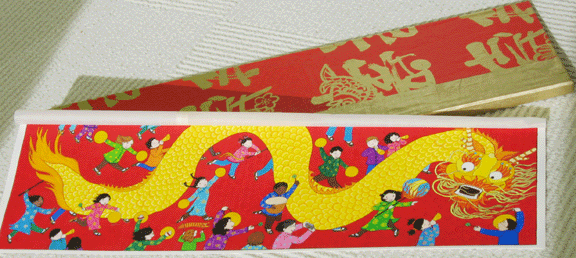
I've been distracted lately, so I thought I'd just post what's on my desk. This painting is really on my desk as the paper is taped onto the table as they don't make watercolor block large enough for the image. It'll be a special gatefold (three page spread) in my "Bringing in the New Year" book. I'm quite proud of it, as it took forever...

Here's a better image of it with the folder I made for the art. It is roughly 8x 30 inches, water-soluable gouache (I can't use acrylic, I take so long thinking about what colors I'm going to use it that dries up on the paintbrush). The book will be published (if I get it all done in time, hopefully!) Jan or Feb of 2008.


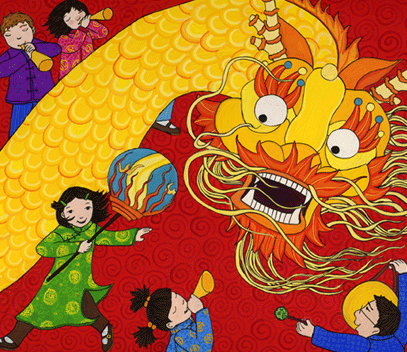
Here's a detail of it:

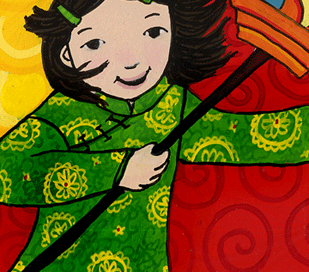
And a closer detail of it. This is why it took so long, I put pattern over pattern on everything:

Epiphany

I like to celebrate Epiphany. One year Alvina and I celebrated it together with a drink together in Bemelman’s which could be the most beautiful bar in the world – all the walls are painted with designs that look like Madeline (Bemelman made the murals in exchange for living rent free at the Carlyle!).

Epiphany is the twelfth night after Christmas, when (in the story: I’m trying to say this without sounding religious, which I'm not!) the wise men recognized the divinity of that baby. I think it’s a great holiday for writers to celebrate,--James Joyce said that every short story should be an epiphany – a sudden recognition of the divine nature or essence of something. I think of it as having something in your writing that suddenly SHOWS readers something, makes them think or notice something they haven't thought of or appreciated in that way before.....maybe something little but still something interesting and even important (universal maybe is a better word). Reading can part the curtain between the everyday and its meaning, and I hope my writing does, even if just for a minute, even if only in a few places within the whole book. Funny and lighthearted stories can do this just as well (if not better, when you're writing for kids especially!) than serious ones,I think - but that's another topic.

Epiphany or Twelfth Night was also the last day of Christmas in England in the Middle Ages – and that’s worth celebrating, too. Someday I’d like to give a big Epiphany party with a yule log and feasting and dancing and everything(maybe even a Lord or Lady of Mirsule!), but for now I’ll settle for a quiet celebration alone or with good friends, something to mark the real end of the holidays and the beginning of a new year of writing.

More on that new year of writing in my next post. For now, may the New Year bring us all many epiphanies – in our reading and in our writing!
--Libby

Friday, January 05, 2007

First Poetry Friday Roundup of 2007

Okay! I can't go through a Friday without all our Poetry Posts rounded up in one corral. So here goes:

Nancy at Journey Woman gives us Next Day, a poem written by Randall Jarrell.

Gregory K. at Gotta Book has written a search Fib for us. And it's about time!

Susan at Chicken Spaghetti provides a link to a funny essay about children's poetry.

Becky at Farm School has a mouth-watering post with a poem--and a recipe-- for fudge cake. Yum!

After Jules at Seven Impossible Things got slapped upside the head into Poetry Friday and her brain cells regrouped, she posted a quote from a little-known poet by the name of Emily Dickinson.

Sylvia at Poetry for Children announces the five Cybil poetry finalists and gives a nod to publishers for their generous book donations.

Michele at Scholar's Blog has a poem by John Keats and Hamlet's soliloquy.

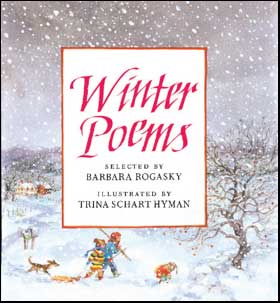
Here at Blue Rose Girls, I have a review of the poetry and art in Winter Poems, an anthology illustrated by the late Trina Schart Hyman.

Cloudscome at A Wrung Sponge has two posts for Poetry Friday: an original haiku and Maya Angelou's A Conceit.


"More, more, more!" said the poetry enthusiasts.

Miss Erin has an excerpt from Yellow Star by Jennifer Roy as her contribution to Poetry Friday.

Emily at Whimsy Books gives us Daddy Fell into the Pond by Alfred Noyes for a few end-of-the-week chuckles.

Betsy at A Fuse Number 8 Production teases us with a tidbit about a weasel. (She knows better than to tease a weasel!)

WEB at Blog from the Windowsill has a review of My Very First Mother Goose edited by Iona Opie. (It's her son's very first book illustrated by Rosemary Wells.)

Liz B. at A Chair, A Fireplace & A Tea Cozy has a classic children's poem for us: Keep a Poem in Your Pocket by Beatrice Schenk de Regniers.

Andrea has a podcast of a talk about the rhyming picture book Safe and Sound at Just One More Book.

We're not done yet! Little Willow joins the Poetry Friday posters with Lewis Carroll's The Walrus and the Carpenter.


Still adding Poetry Friday posts on Saturday!

Karen at Lighting the Fires brings us John Walsh's The Christmas Tree, a poem about a tree after the holiday season has passed.

Franki at A Year of Reading has the introductory poem from Sandra Pinkney's READ AND RISE. It's a poem about reading written by Maya Angelou.

At Mitali's Fire Escape, Mitali presents Wordsworth, Bengali-style.

Kelly Fineman at Writing and Ruminating has Exercise Your Brain, a post about rhyme's effect on memory.

Lisa at Passionately Curious brings us A Snowflake Fell, a poem by Jack Prelutsky, our new Children's Poet Laureate.

Check out Check It Out for the Poetry Friday post The Seasons. MsMac has got a high haiku fever!

Let me know if I missed your Poetry Friday post.


POETRY FRIDAY: Winter in Poems & Paintings


WINTER POEMS
Selected by Barbara Rogasky
Illustrated by Trina Schart Hyman
Published by Scholastic (1994)

Paperback Reprint (1999)


Last Friday, in A Gift of Poetry, I wrote about A CHILD’S CALENDAR, a book of children’s poems written by John Updike and beautifully illustrated by the late Trina Schart Hyman. I believe her illustrations in the 1999 edition breathed new life into that book of poems, which was first published more than forty years ago. After writing that post, I thought about Hyman’s picture book art and her contributions to children’s literature. What a legacy she left behind. What a great loss to the world of children’s literature when she passed away in 2004.

Today, I have decided to write a review of WINTER POEMS, another poetry book Hyman illustrated. WINTER POEMS is an anthology compiled by Hyman’s best friend and housemate, Barbara Rogasky. It is a poetry book for people of all ages. It would be just as fitting a gift for an adult as it would be for a child. The anthology contains twenty-five works—many penned by great writers of both adult and children’s poetry: Shakespeare, Wallace Stevens, Emily Dickinson, Robert Frost, Thomas Hardy, William Wordsworth, Carl Sandburg, Elizabeth Coatsworth, and Lilian Moore. You will not find most of the poems included in this book in any other anthology for children.

In a note to readers, Rogasky explains why she and Trina Hyman made the book. First, Rogasky tells of her love of winter: “In the country, where I live, all the seasons are beautiful. But winter is the best. A hard walk with a breath a frosty cloud is much more refreshing than a sweaty walk in the hot sun. The color and light over the snow’s whiteness are ever-changing and glorious.” (And Hyman’s illustrations, done in acrylics, definitely capture both the glory and the chill of this season.) Next, she writes about her love of poetry: “A poem is a kind of miracle of words. It can tell a story, flash scenes to the mind’s eye, and use many fewer words than any other kind of writing.” She speaks, too, of the music and rhythm inherent in the genre. Rogasky provides a third reason for this anthology: She and Hyman could not recall a collection of winter poetry that did not include poems about Christmas or Hanukkah or New Year’s Eve. They wanted to produce a “nonsectarian book for people with different religious calendars.”

WINTER POEMS is a true collaboration between the anthologist and the artist. In the book, Rogasky takes us through the coldest season of the year with poems about such things as the steady winter rains in Oregon; a howling snowstorm; a child explaining his knack for skiing; the moon, the stars, and other lights that “punctuate” the winter dark; and poetry about animals—birds, a cat, and Edna St. Vincent Millay’s A Buck in the Snow. She begins the anthology with Rachel Field's Something Told the Wild Geese and ends it with an excerpt from Carl Sandburg's Blossom Themes. Hyman, for her part, brings us into the soul of winter with her evocative paintings of falling snow; of someone shoveling out a path after a big storm has left the yard, the car, the rooftops of the house and barn pillowed with snow; of two people (Rogasky and Hyman) walking “in velvet shoes” under a canopy of leafless trees in a town stilled by downy whiteness; of skaters gliding across an icy pond as the last remnant of pink sky hovers above dark hills at twilight.

The illustrations in WINTER POEMS were definitely a personal and intimate artistic creation of Hyman’s. They were “based on real things.” The house pictured in the book is the one in which Hyman and Rogasky lived. The dogs, the cat, the sheep were all their animals. The young boy is Hyman’s grandson, Michou; the young mother is her daughter, Katrin; and the man is Katrin’s husband, Eugene.

As in A CHILD’S CALENDAR, Hyman’s illustrations in this book do not overwhelm the text—rather they draw the reader into the heart of the poems, into the colors and cold beauty of this season, into the mountainous countryside of New Hampshire where the artist and anthologist lived—a place where nature herself writes poetry across the landscape with a white and wintry hand.

WINTER POEMS is a special book. It is a perfect marriage of fine poetry and fine art. Although the book is no longer available in hardcover, there is a paperback edition that is still in print.


For information about the life and art
of Trina Schart Hyman visit her page
at Children’s Book Illustrators,
a website developed by Denise Ortakales.


Visit the Horn Book website for a remembrance of Trina Schart Hyman written by Lois Lowry (January/February 2005 Horn Book Magazine) and for a portrait of her written by her daughter, Katrin Hyman, (July/August 1985 Horn Book Magazine).

Wednesday, January 03, 2007

painful

I'm supposed to give a talk tomorrow. I know everyone wants to hear about the book process, etc. Here's the problem. I don't want to talk about it! It's painful. Making a book is so exhausting and I put everything I have into it. No author or illustrator can say that a book goes smoothly from beginning to end. There are disagreements whether we like it or not. Some editors make the disagreements more like easy discussions while others don't. Either way, it's hard for me to rehash it.

Anyone else feel as I do or am I out there in left field?

meghan

p.s - I don't understand the saying "left field" since it's the right fielder who never gets the balls and can be completely out of it. I know since I was a super star leftfield softball player for years. Yes, I think very highly of my abilities.

Tuesday, January 02, 2007

Back to work


Happy new year friends!

Nothing like a nice long stretch of time away from the studio to recharge your batteries. I spent the past couple weeks traveling to Virginia and St. Louis visiting family (and their dogs- note the sleigh bells on their collars). There was so much to do with shopping and logistics that I actually managed to forget about work for a few days and think about other things (though I am not a fan of rampant consumerism in general).

About half way through though I started to get antsy and feel like something was missing... I laughed when I read Meghan's post about not being capable of relaxing because I think I am the same... I like the IDEA of relaxing, and plopped on a hot beach for a few days I can usually manage to forget just about everything, but it takes a lot. By the time I got back this weekend I couldn't wait to paint again, whenever I question if I'm doing the right thing I guess the solution is to just stop and see how I feel. Usually the urge comes back twice as strong.

no resolutions for me


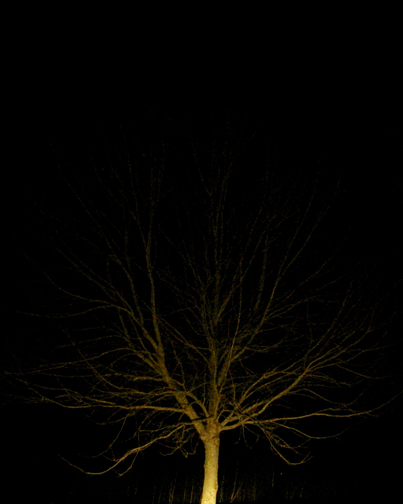
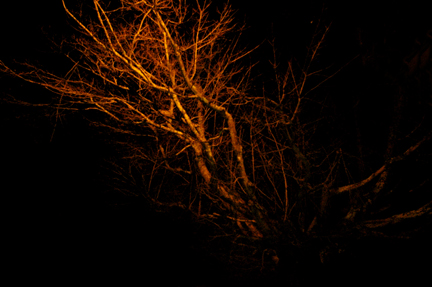
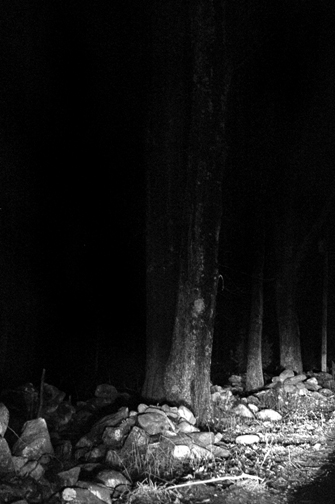
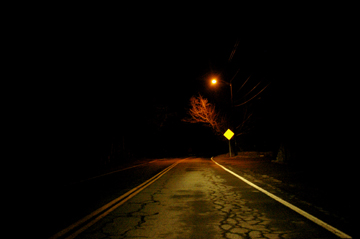
(the photos throughout were done after I wrote my "bored" comment on the blog while visiting the family. I need to keep busy so I carry the camera with me. I was going for spooky night theme. I'm putting these photos on here because the blog is better with pictures. When I have the time I'll put the whole series on my website.)


As I'd mentioned before, I have some book talk to do here that's past due. I'll do that soon. Right now I need some help. I'm working on yet another nonfiction book for kids called Astronaut Handbook. This book will tell kids how they can become an astronaut, what it's like to be one, etc (yes I'll answer the bathroom question!)

I want this book-to-be to look like a handbook... whatever that looks like. I keep thinking about the Worst Case Scenario handbooks but those are jokes. Do any of you know of any serious ones that I might use as models? Throw them all at me now! I need to get going!


On another topic this is the first of the new year. This is the day people start listing their new year resolutions. I, for once, don't have any. I'm trying the best I can. I'm perfect, gosh darn it! No, no, I'm really not at all. My biggest issue is my lateness. I'm late for EVERYTHING. I suppose I should work on that but I don't want to commit just yet. This brings me to a question--can artistic people get away with more bad behavior--lateness, dressing down, etc?


And now, for now particular reason, I will list the best "thinking" spots.


1) the bathroom. NOT while I'm sitting on the toilet. I'm talking about just standing in any bathroom--it's the quiet spot. The lighting is different. Perhaps this is why I'm late for things. I stand in front of the mirror and "dry" my hair while actually dreaming up new stories

2) Trying to fall asleep.

3) While driving -- I suppose I shouldn't try to write while driving in traffic but whatever...

4) the subway when I'm not in a rush to get somewhere and I have my headphones on

Those are my "spots." What are yours?

meghan

p.s- did anyone listen to my audio version? Should I package it with a nice CD and pamphlet? Have I gone too far and should stick to what I do best?


pps- I'm speaking this thursday at the GAG in NYC. It's free so stop by! Of course I'm not AT ALL prepared. I shouldn't take on things I know I don't have time to prepare for!


Monday, January 01, 2007

Thank You!

On this first day of 2007, I would like to send my thanks to the following people—many of whom are bloggers I have never met face to face.

Thanks to the Blue Rose Girls—Grace, Alvina, Anna, Libby, Meghan, and Linda—for inviting me to be a regular contributor to their great blog.
Thanks to Grace for being such a good friend and for all her support.
Thanks to Janet Wong for her advice and encouragement.
Thanks to Kelly Herold and Anne Boles Levy for the Cybil Awards. I appreciate all the hard work they undertook in organizing the nominating panels and judging committees and in providing the Cybils with such a great website.
Thanks to Kelly Herold again. Big A little a is often the first blog I visit every morning. Her list of links to other wonderful children’s literature blogs is like a treasure map on the Internet.
Thanks to Betsy for A Fuse Number 8 Production—one of the first children’s literature blogs I came across last year. It helped hook me on blogs. Hmmm…I wonder: Should I thank her for that?
Thanks to the four bloggers who served on the Cybil poetry nominating panel with me: Wordswimmer, Farm School, Seven Impossible Things (Eisha), and Poetry for Children. It was great to find other individuals who share my passion for children’s poetry. I enjoyed the in-depth and thought-provoking email discussions we had about poetry.
Thanks to Susan at Chicken Spaghetti for taking charge of the Cybil poetry panel and for getting its members off to a good start. Thanks to Susan, too, for her excellent blog.
Thanks to Three Silly Chicks, Journey Woman, and Book Buds for their great contests in 2006. I enjoyed submitting entries. It was fun. I hope they’ll hold more contests in 2007!
Thanks to Gregory K., The Big Fibber, for welcoming me to the blogging world and for writing all those clever Oddaptations.
Thanks to all the other wonderful children’s literature bloggers—too numerous to mention without fear of leaving someone out—who spend their time writing about children’s books. You have been an excellent resource for me.
Thanks to all of you who have left comments at my posts at Blue Rose Girls. I appreciate your thoughts and responses. Writers always hope they will find an audience for their writing. Your comments let me know that some of you have taken the time to read what I have written.
Thanks to Pat Purdy, owner of the Banbury Cross Children's Book Shop in Wenham, Massachusetts--and to her two able assistants, Gwen and Diane. I know I can always trust their advice and suggestions. They love and read children's books. (Both Pat and Gwen are former children's librarians.)
Thanks to my wonderful husband (the fellow with the white beard sitting next to Grace in the last picture) of thirty-seven years who never once asked me: Do you have to spend so much money on children’s books? Don’t you think you already have enough kids’ books? Can’t you find a better way to spend your money? Shouldn’t you put a little more money aside for your old age? Thanks for understanding my passion for children's literature.

Thanks again, everyone…and Happy New Year!

On the Pulse of a New Year


To welcome the New Year: Here is an excerpt from Maya Angelou’s poem On the Pulse of Morning, which she read at the Inauguration of William Jefferson Clinton on 20 January 1993.


Lift up your eyes
Upon this day breaking for you.
Give birth again
To the dream.

Women, children, men,
Take it into the palms of your hands,
Mold it into the shape of your most
Private need. Sculpt it into
The image of your most public self.
Lift up your hearts
Each new hour holds new chances
For a new beginning.
Do not be wedded forever
To fear, yoked eternally
To brutishness.

The horizon leans forward,
Offering you space
To place new steps of change
Here, on the pulse of this fine day
You may have the courage
To look up and out and upon me,
The Rock, the River, the Tree, your country.
No less to Midas than the mendicant.
No less to you now than the mastodon then.

Here on the pulse of this new day
You may have the grace to look up and out
And into your sister’s eyes,
And into your brother’s face,
Your country,
And say simply
Very simply
With hope—
Good morning.

(Go here for the full text of On the Pulse of Morning.)


GOOD MORNING and HAPPY NEW YEAR!

Don't forget to visit The Cybils 2006 website.

The five finalists in each book category will be announced today. Hooray!


The posting of the five-book shortlists will occur at the following times:

9:15 Poetry
9:30 Non-fiction Picture Book
9:45 Fiction Picture Book
10:00 YA fiction
10:15 MG/YA Non-fiction
10:30 MG fiction
10:45 Graphic Novel
11:00 Fantasy/Science Fiction

Thanks to Kelly at Big A little a for the posting times listed above.

May 2007 bring us many wonderful new children's books!