Monday, February 12, 2007

SCBWI and Kidlit Drinks

My life is dominated by children's books, it being my job and all, but last week was even more so because of the SCBWI Annual winter conference here in New York. I was on the faculty for the Writer's Intensive Workshop on Friday, and my day started with breakfast at 8:15 am at the Hilton with 24 of my colleagues. It was great catching up with old friends, some of whom I haven't seen in a long time, others who I see quite often, and meeting for the first time several editors I only knew by name and reputation.

I facilitated two sessions of critiques, one in the morning, one in the afternoon. Each editor and agent was assigned a table of eight or nine writers. Each writer would have 12 minutes to read a 500-word excerpt and get critiqued by me and the other writers. I had the person to the left read for the person to their right, so as to have someone unfamiliar with the work read it aloud, and for the most part, everyone was an excellent reader, and it helped us identify passages and words that perhaps weren't working. Part of me really likes these impromptu critiques, as they require no preparation, but part of me is terrified of them. It takes a lot of concentration, and at times, through no fault of the writing itself, I would find myself drifting and have to bring myself back so that I could comment intelligently. I also always worry if the writers won't respect my comments, if I'll say something stupid. But overall, I felt that everyone had helpful and constructive things to say, and it was nice to be able to take the focus off myself by having everyone else comment as well. I thought the writers at both of my sessions were professional and kind, and the time flew by, and I hope everyone found the sessions helpful.

The day also included a morning panel on "How to Receive and Evaluate Criticism," and then ended with a panel on Revision (two of my fellow book group members, Tara Weikum and Julie Strauss-Gabel, were panelists), and then a surprise keynote by Newbery-Award winner Linda Sue Park--she gave a warm and touching speech.

At 6 pm the VIP cocktail party began. I had attended for the first time last year, and was amazed at just how many people there I knew, and this year was no different. Fellow editors, agents, authors including three I'm working with (Gary Golio, Ellen Yeomans, and Wendy Mass), familiar faces from Kindling Words, and was surprised to run into my buddy Jarrett Krosoczka and his fiance--I hadn't known they would be attending. It was after 7:30 before I knew it, and I headed over to Bar 9 for Fuse#8's Kidlit Drink Night. I was a tiny bit apprehensive because I had recommended the bar, and hoped people liked it, but everyone seemed to have a great time, and thank goodness Fuse reserved the back room, because it was a great turnout, so crowded. Most of the usual crowd was in attendance, including all but one Longstocking. As usual, Meghan and I were there to represent the Blue Rose Girls. I met bloggers MotherReader and Oz and Ends. More familiar faces from Kindling Words were there, as well as some old SCBWI friends. Agent Barry Goldblatt was there with a client or two (incidentally, my very first solo agent lunch was with Barry), a good Class of 2K7 contigency was in attendance, and Linda Sue Park made a late appearance, as did Caldecott-Medal winner David Diaz. A hardcore group of Kidlit drinkers stayed past midnight. I'd call it a smashing success. And yes, I did eat tater tots. I did remember to take some pictures, although not as many as I had planned on taking. One of the 2K7ers was taking pics, so I'm sure more will surface. But as promised, here's a sampling:

Jenny Han and Wendy Mass

2k7er (can anyone identify her? I don't know her name), Rebecca Stead, Karen Romano Young, Donna Freitas

MotherReader, me, Oz and Ends


Fuse#8!

Saturday, February 10, 2007

bridge to terabithia

Why oh why do these big film companies always have to ruin these books? True, I have not seen the film but it looks awful. The version that sticks in my mind is the PBS Wonderworks 80s version--my memory might be a bit shady but I guarantee it's better! It showed kids being kids and using their imaginations as opposed to computerized giants and creatures taking over the landscape. Lame-o!

I also highly recommend PBS's version of the Little Princess. Don't watch that newer one!

meghan

Friday, February 09, 2007

POETRY FRIDAY ROUNDUP: February 9, 2007

Kelly at Big A, little a has a book review of COWLICK. It's a kind of pourquoi story that attempts to explain how those wayward tufts of hair known as cowlicks are created. It's about a COW and a LICK...and I'll say no MOOOre!

Greg at GottaBook has a food poem about prunes for us today. I think the post title should be "Uh...Oh...GottaGo!"

In anticipation of Valentine's Day, Nancy at Journey Woman gives us a poem by Alan Dugan entitled Love Song: I and Thou.

At 7-Imp, Jules and Eisha are in love mode, too, with their Poetry Friday: Valentine Edition. Yep, they've got a poem for us entitled Falling in Love Is Like Owning a Dog.

In her The Poetry of Friday post at A Year of Reading, Mary Lee presents an original acrostic poem about...what else?...Friday!

Tricia has a terrific post, The Poetry of Science, at The Miss Rumphius Effect. She includes an excellent list of recommended poetry books.

If you're looking for some love poetry for kids, scoot on over to Poetry for Children. Sylvia has a list of poetry books she recommends and a poem by Ralph Fletcher entitled Owl Pellets.
Don't forget to check out Sylvia's post from last week, Connecting Poetry and Picture Books.

Susan Taylor Brown has posted a parcel of short thematic poems at Wordy Girls for us to read this frosty February Friday.

Emily at Whimsy Books has a book review of and an excerpt from LOVE, RUBY VALENTINE in her Love and a Little Anxiety post.

Adrienne gives us a review of WINGS FROM WORDS: AN ANTHOLOGY OF POEMS, which was selected and illustrated by Tasha Tudor. This book, published in 1964, sounds like a forgotten treasure.

At Propernoun, Mindy has a review of Diane Siebert's TOUR AMERICA, one of the five Cybils poetry book finalists.

Poetry Friday Goes to the Dogs at The Kiddosphere! If you don't believe me--check it out. Actually, Jennifer Schultz has written a review of GOOD DOG, a collection of poems written from the perspective of dogs of different breeds.

Andrea and Mark at Just One More Book discuss Wong Herbert Yee's BIG BLACK BEAR, a rhyming book that never fails to crack up their girls every time they read it.

Christine suggests we go North South to The Simple and the Ordinary for an original collaborative poem written by her, Pippi, and Harry.

In For the Snark Was a Boojum, Kelly Fineman joins the Poetry Friday posters with a review of THE ANNOTATED HUNTING OF THE SNARK: THE DEFINITIVE EDITION.

The Old Coot, a retired sailor, has written an original Fib for us today.

Would "The Scholar" ever disappoint us bloggers on Poetry Friday? Ever? Never!!! Michele has Horatius, a poem written by Thomas Babbington Macaulay.

If you're in the mood for a review of a great book of haiku written by Nikki Grimes, check out the Pocket Full of Poems post at A Wrung Sponge.

And speaking of haiku, I've written reviews of three haiku poetry books that are great for younger children at my Happy Haiku to You post here at Blue Rose Girls.

Little Willow gives us F. Scott Fitzgerald's On a Play Twice Seen for our poetic reading pleasure today.

How about an old familiar children's poem written by Vachel Lindsay? Lisa Harrison gives us The Moon's the North Wind's Cooky at Passionately Curious.

Check out Susan's The Hallowed Heights of Chicken Spaghetti. She's got a post about 17 things Odysseus isn't allowed to do anymore. Sorry...my mythtake. I got it wrong. You'll just have to go on over to Chicken Spaghetti to find out what she has for us this Poetry Friday!

Liz In Ink tells me she's playing with jump-rope rhymes this week. So skip on over there.

The famous Liz B. at the blog with the really looonnnggg title has a fine review of THE BRAID, a verse novel written by Helen Frost. Liz includes lots of links for her blog readers.

POETRY FRIDAY: Happy Haiku to You

HAIKU FOR YOUNG CHILDREN

Last Friday when I stopped by my favorite children’s bookshop, the owner lent me some F&G’s of books that will be published this spring. She mentioned that there was a nice little collection of haiku poems in the batch she gave me. That collection, today and today: haiku by Issa, was illustrated by G. Brian Karas. Now, I’m a true admirer of Karas’s style of illustrating. I especially like his illustrations in ATLANTIC; MUNCHA, MUNCHA, MUNCHA; and CAR WASH. But…a book of poetry? “Would his style of art enhance a collection of haiku for young children?” I wondered. Well…I am happy to tell you I was pleasantly surprised with Karas’s concept for this book and impressed with his selection of poems and with his illustrations.


today and today: haiku by Issa
Illustrated by G. Brian Karas
Published by Scholastic (2007)

In his note to readers on the verso of the title page, Karas explains that he selected and arranged eighteen of Issa’s haiku “to tell the story of a year in the life of an imaginary family.” I think this story telling approach works well. As we read through the book from beginning to end, we experience the passage of the four seasons with three generations of a loving family. We see members of the family enjoying the weather and appreciating the beauty of nature with each other and privately.


THE ILLUSTRATIONS

I’ll describe one illustration from each of the seasons to give you a sense of the art in the book. I will also include three of Issa’s haiku that Karas selected for today and today.

A Spring Illustration
An old man, the grandfather, sits under a blossoming cherry tree peeling an orange.

The haiku that appears on the page with this picture reads…

Just being alive!
—miraculous to be in
cherry blossom shadows!

A Summer Illustration
The father, son, and grandfather lean on a fence and gaze over green fields at dawn.

An Autumn Illustration
Two children, a girl and a boy, are shown offering chrysanthemums to their grandfather as he sits near the bare cherry tree in their yard, which is blanketed with golden leaves.

And the haiku that accompanies this picture reads…

How well we have slept
to feel so fresh this morning,
dear chrysanthemums


A Winter Illustration
The parents and children visit a grave as snowflakes fall over a cemetery.

The final haiku in the book brings us full circle and back to spring again:

As simple as that—
spring has finally arrived
with a pale blue sky

In the accompanying illustration, the granddaughter sits in the chair under the blossoming cherry tree—as her grandfather had done the previous spring.

For his art in today and today, Karas combined a number of different materials: rice paper, wood plank, pencil, and paint. There’s a simplicity to the illustrations. They are not busy; they do not overwhelm the haiku. There’s also a softness to the colors and the shapes. Like the haiku poems included in the book, each of Karas’s illustrations captures the essence of a single moment in time.

Karas portrays a kind of innocence and sweetness in today and today. This is a little gem of a poetry book that is perfect for younger children—and is one that may help them to develop an appreciation for haiku. I am definitely ordering a copy of this book for myself.


MORE BOOKS OF HAIKU POETRY FOR YOUNG CHILDREN

ONE LEAF RIDES THE WIND:
COUNTING IN A JAPANESE GARDEN
Written by Celeste Davidson Mannis
Illustrated by Susan Kathleen Hartung
Published by Viking (2002)

This is a nice combination of a counting book and a haiku poetry book. Mannis, the author, adheres to the traditional Japanese haiku of seventeen syllables in her poems about counting animals and objects in a Japanese garden. Hartung, the illustrator, takes us along with a young kimono-clad girl as she counts her way through the garden.

Here is an excerpt from the book:

Hoping for some crumbs,
they nibble at my fingers.
Nine glittering koi.

In the illustration for this haiku, Hartung paints a close-up of a young girl lying next to a fishpond in a Japanese garden. She is looking at nine koi—a kind of fish “admired for their colorful appearance and hardiness.”

In one of the loveliest illustrations in the book, the artist paints the same young girl sleeping on a grassy mound near the pond. Eight pink lotus flowers bloom on their floating leaves in the foreground. On the opposite page we read the following poem:

What do flowers dream?
Adrift on eight pond pillows,
Pink-cheeked blossoms rest.


Hartung’s art, done in oil glazes, is striking and a fine complement to Mannis’s text. The objects to be counted are clearly visible. In the final two-page spread, the artist includes all the objects and animals the girl has counted in the garden: one leaf, two carved temple dogs, three bonsai, four birds, five roofs on a pagoda, six wooden sandals, seven “sweet surprises” on a lacquered tray, eight pink lotus flowers, nine koi fish, and ten stone lanterns.

The haiku poems are printed on the right-hand pages of the book in large black type with the appropriate numerals placed above them. At the bottom of the poem pages, in small print, Mannis includes information about such things as bonsai, the Shinto religion, the pagoda, lotus flowers, and koi fish.

All in all, ONE LEAF RIDES THE WIND is an attractive package that lends itself well to a number of uses in an early childhood classroom.


DON’T STEP ON THE SKY: A HANDFUL OF HAIKU
Written by Miriam Chaikin
Illustrated by Hiroe Nakata
Published by Henry Holt (2002)


In this book, Chaikin does not adhere to the traditional haiku that is written in three lines, with seventeen syllables. But the author does include an “About the Poems in This Book” at the beginning of DON’T STEP ON THE SKY. She explains to readers about traditional haiku and about how the rules for writing this form of poetry have become more flexible in modern times. She does stress, however, that the haiku should “capture a moving experience in a few words.” The book includes haiku about birds and bugs, flowers and weather.

Here are a few examples of poems from the book:

Lovely lily
alive for only a day.
Take good care of yourself.


A blade of grass
pushes through cement.
Hello, world.


After the rain
a puddle.
Careful.
Don’t step on the sky.


Nakata’s winsome watercolor illustrations celebrate the joy of a little girl as she plays with her kitten, admires the quick growth of a bamboo tree that has grown taller than she, jumps over a rushing brook, and imagines the raindrops on her window at night as “a gallery of diamonds.” The artist used a delicate hand in painting her fluid illustrations. There are no bold black lines defining shapes—no thick solid colors giving the illustrations a sense of weight on the page. Rather, the paintings have a light, airy appearance that complements the childlike wonder expressed in Chaikin’s haiku.

DON’T STEP ON THE SKY would make a nice introduction to haiku for children. It’s perfect for spring reading.
--------------------------------------------------------------------------------------------
CHILDREN'S HAIKU
Read some autumn haiku written by my second grade students during the last year I taught in an elementary classroom.
--------------------------------------------------------------------------------------------
AN ORIGINAL HAIKU FROM ME TO YOU
After the blizzard
snowmen are sprouting up like
winter wildflowers

Thursday, February 08, 2007

strange, odd, scary nonfiction

I'm a little pressed for time so this is right from my blog (which isn't up yet)

"Research
I’m deep into my research for book number one million and four. It’s actually for book number 8, I believe, but it may as well be that first number. I’m exhausted! Doing nonfiction is really odd. I always end up finding out more than I want to know. For example, did you know that astronauts put on diapers before trying on the space suit? Yup. That’s because it takes so long to put on/take off. Then there’s the fact that in space they drink their own pee… or rather filtered pee turned into water. Then there’s the good ol’ camera at the bottom of the toilet to help the ‘nauts aim so that the undesirables don’t float off. That’s what I’m going to call the astronauts from now on—the ‘nauts. Oh boy, I’m losing my mind again. This is happening quicker than it should!"

Anyhow, I'm weary to divulge a new idea to you all because I don't want anyone stealing it!... but then again, who would?

Ever heard of Topsy the Elephant? No? Yes? Well, it's a sad story. Thomas Edison, worshiped by many, electrocuted the circus animal. What's equally bad is that he filmed it, which you can see if you put it into YouTube. What's also bad is that he electrocuted many animals--puppies, cats, and horses... He also introduced the new form of the death penalty--electrocutions are better than hangings, aren't they?

Yes, dear readers, Edison had a dark side. Topsy's life story is also sad. I won't bother explaining it all because I want to make it into a book!

A book? you ask. For children? Huh?

Well, this would be a graphic novel (a different sort with maybe one or two images per page and lacking the speech bubbles) and it would either be for teens or adults.

Perhaps I'm crazy but I find this story to be fascinating. It needs to get out there! So, if any editors are reading this and don't think I’m completely nuts, send me an email! I want to sell this idea.


Wednesday, February 07, 2007

will you come to my party?

As I look back at my publishing career, my biggest regret is that I never had a book party. When that first book came out, there was no fanfare, no balloons or cake, not even a proud phone call. Just the quiet ripping open of a cardboard box.

I'm not sure why I've never celebrated my book publications. Perhaps it was the hustle and bustle of life and schedules, matched with bare bones practicality. "Isn't a book party rather indulgent?" one half of my brain would say to the other, "Do you really need to spend your time and money on that?" And if that wasn't convincing, insecurities filled in the cracks, "Who would you invite anyway? Would they even come? They'd all think you were just showing off."

Well, no more. I think it's about time I celebrated some of the things I'm happy about in my life, and that includes my books. My next book, Lissy's Friends, is scheduled to be released on the same day as my birthday (May 17th) and it has a doll to boot. I think I should have a party. I really want it to be fun, special, unusual and memorable. Does anyone have any creative ideas?

And you'll come too, right?

Monday, February 05, 2007

Lunch Box Extravaganza

This weekend I was invited to visit the lovely Portland, Maine for the Lunch Box series, a monthly event that brings authors and illustrators to the city to speak with kids about their work. The event is organized by Curious City, a fabulous company that comes up with creative ways to get books in kid's hands. They were a pleasure to work with and orchestrated the event like real pros!


My presentation covered a little about where I grew up and why I became an artist, then showed the kids some art and talked about technique. The event really focused on process (these kids know a LOT about books!)... after my talk everyone took part in an art activity based around how I make my illustrations. See below a kiddo's gorgeous version of Francine, from my book Francine's Day. Note the very sophisticated "cross-hatching" technique used on the shirt!


The kid below is the cutest. After I did a demonstration of how I draw Francine, the kids were invited to come up and color her in. This one could barely reach but was very creative!


All in all a great event, and a needed break from my deadline inspired hibernation!

Remembering childhood

Back in the comment section of my post on "What Makes Me so Qualified to Edit Children's Books?", Anna reminded me of this quote from Ursula Nordstrom:


Asked pointedly by Anne Carroll Moore, the New York Public Library's powerful superintendent of work with children, what qualified her (Ursula), a nonlibrarian, nonteacher, nonparent, and noncollege graduate to publish children's books, Nordstrom just as pointedly replied, "Well, I am a former child, and I haven't forgotten a thing."

I'm realizing more and more that this is true for me. And I've been seeing a pattern lately where many things have reminded me of my childhood. A friend recently sent me two mix-CDs she and her husband compiled of 80s ballads that really took me back. Some of the songs included were "One More Try" by Timmy T, "Toy Soldiers" by Martika, "Glory of Love" by Peter Cetera, and "Lost in Your Eyes" by Debbie Gibson. Each song took me back to junior high and high school, each song held a memory of my childhood for me.

And then I've been thinking about New York and how much I love it here and feel at home here, and I realize that part of the reason is that I've found places to go and activities to do that bring me back to my childhood.

For example, one of my favorite after work bars in the city is Bar 9, where the next Kid's Lit Drinks night is taking place on Friday. And the biggest reason why I love it so? They have tater tots on the menu.

Another example is Barcade in Williamsburg, a bar with old-school arcade games, such as Rampage, Tetris, Ms. Pacman, Digdug, Gauntlet, Tapper, etc., all for the original price of 25 cents, unlike the fancy new arcades such as Dave and Busters and the ESPN Zone in Times Square. I wasn't a huge video game player as a kid, but I did a fair share of playing, and many an hour was spent watching my older brother and others play.

And speaking of Tetris, last Thursday I went to Nerd Nite, a monthly event held at a bar in the East Village where two speakers talk for 20 minutes on various nerdy topics. Friday's topics were neurogenesis, and Tetris. Tetris! A true Tetris scholar enlightened us on the history of the game. And as I was somewhat of a Tetris scholar myself in high school and college, I quite enjoyed the talk.

And last but not least, two Wednesdays ago I went roller skating at the Roxy for a friend's birthday. Remember back when you had your birthday party at a roller rink? I remember going around and around, spending quarters on the holographic stickers in the vending machine, doing the Hokey Pokey in the middle of the rink. This wasn't exactly the same--no stickers, not Hokey Pokey--but it was the same old-school roller skates with the rubber stop in the front. It was the same going around and around the rink to dance music. And it was the same thrill--the awkwardness the first time you go out on the floor, before you get your sea legs. The breeze of speed on your face and through your hair. The adrenaline of going fast while not quite knowing how to stop. Running into your friends as you went around.

I've grown up, for sure. I live an adult life with adult problems and responsibilities. But I remember the child I was, the shyness, the exuberance, the worries, the carefreeness. Viva the inner child!

Saturday, February 03, 2007

Starting with Yellow

Once I wrote what was supposed to be a picture book on LIGHT AND COLOR. Until its research, I’d always vaguely assumed that objects just “are” certain colors. You know: Lemons are yellow. Period.

I learned that what we see as color is really reflected light. When something is, say, bright yellow, it absorbs all the colors of the spectrum except bright yellow. The lemon reflects yellow light waves and our eyes translate them into colors, the way our ears translate radio waves into sound.

Even more fascinating (to me) was learning that light is both matter and energy, and each color, or part of the spectrum, travels in the same straight line, but vibrates (or wriggles as I said in the ms.) at a different frequency and has a different amount of energy. Blue has the most energy, red the least.


Yellow is right in the middle,

which is probably why in the I Ching yellow is always talked about as “the mean,” (in the sense of middle)….and the Greeks talked about the “golden mean.” Right now I want sunlight, energy, and the color yellow itself everywhere around me – and this is what I’ve got. Maybe I need to be less extreme, maybe I just like the color, no psychology or science or philosophy involved, maybe I was just starved of sun in my old place – but bright yellow is what I’ve painted my living room:


That’s how it looks in the late morning sun (well, it's actually a lot yellower than it looks on my screen). When the sun rises, it glows like a box of fire….and even when there is no sun and very little light at all, it still looks yellow. In most lights, it's not quite the tone I’d imagined,and I’m hoping that when the BRG come visit they can help me pick the color for my other room – color is tricky!

Writing about this makes me want to go back to that ms. – the editor (not Alvina) liked my outline, but I got so involved in the research that the ms. became at least ten times too long, blathering on about photons and atoms and the kinds of colors we can’t see, like ultraviolet (which bees can see but can’t). As the poor editor said,
“My head was spinning!”

I’d been spoiled by Alvina editing things for me; but if I go back to Light and Color, I’ll have to learn to do it myself – at least for the first pass! What do you think? Is this ms. worth working on or should I stick to novels? I was going to put up a sample page but chickened out. Instead here is another picture (Meghan and Linda-- Aliens and Magic Hoofbeats are on this shelf too but they don’t show as well as the others because they are lying down. Molly Bang isn’t a BRG but I like her so My Light is there too. She had the same trouble with text and put all the stuff she had to delete on her Website!)

Friday, February 02, 2007

POETRY FRIDAY: To Go Singing through the World

One of the best things about shopping for books in a small, independent children’s book store owned by a former children’s librarian is the quality and the kinds of books displayed on the shelves…and the absence of celebrity titles, Disney versions of fairy tales, and picture books about canines with chronic gastrointestinal disturbances.

Last week, as I browsed around in the Banbury Cross Children’s Book Shop, a book cover caught my eye. Looking closer, I read the title: TO GO SINGING THROUGH THE WORLD. Liked the title. Read the subtitle: THE CHILDHOOD OF PABLO NERUDA. Now how could a poetry lover like me let a book like that sit on the shelf? I picked up the book, settled myself down in one of the shop’s comfy wing chairs, and began reading.


The text of Deborah Kogan Ray’s picture book biography befits a biography about the young life of a great poet: It is well written…and oftentimes lyrical. In illuminating the early life of Neruda, she blends her words with those of the Nobel Prize winner. Neruda’s words and the excerpts from his poems are printed in italics so the transitions in the text’s third person and first person narrations are made clear to readers.

I found this book about the early years of Neruda’s life interesting and informative. Neruda, born Neftali Ricardo Reyes Basoalto, was raised in the town of Temuco—a pioneer mill town “in the shadow of volcanoes and surrounded by rain forests” in Chile. Neruda’s mother died when he was very young. His stern father, Don Jose, was a railway man who wanted his son to do well in school so he could have a better life. Don Jose married his second wife, Dona Trinidad—who became “the guardian angel” of the poet’s childhood. The young poet was a good listener and liked to hear the “old” stories his stepmother told him about the Mapuche, the native people who were called Indians by the settlers. He listened to the conversations at his father’s table. He was “curious about everyone he met and fascinated by the world around him.”

Deborah Kogan Ray compares the young Neruda to a silent, waiting volcano with fires stirring deep within him. He was shy, self-conscious about his stutter, and “deliberately set himself apart and tried to be different” from the other more “boisterous” boys who often threw acorns at him. He built a protective shell around himself. He lived in a world of books, in the nature of the rain forest that he loved, in the thoughts and images that burned inside him, in the words he was able to write down on paper but not express orally to others.

As Pablo grew—so grew the town in which he lived. He began writing about school events for a small local newspaper. About this time, Gabriela Mistral, a famous poet who later became the first Latin American woman to receive a Nobel Prize for Literature in 1945, moved to Temuco. She was the new principal of the girls’ school. Mistral read the newspaper articles Neruda had written and “was impressed by his fine use of language…” She asked to meet the young man. Mistral became Neruda’s mentor. She gave him books to read, “opened new worlds” to him, and helped to crack the shell that he had built around himself. She encouraged Neruda to open up his heart and to express all the songs that were inside so the world could hear them.

This is a fine book in so many ways. Most importantly, it illuminates the life of a young man who was different from his peers, who didn’t do well in math, who lived in a world he had made for himself, who early on had a passion for stories and words, who had a burning curiosity to find out about the things that lay beyond his town—a young man with fears and desires who, with the love and understanding of a wonderful stepmother and the help and support of a caring and accomplished mentor, grew up to become one the world’s most celebrated poets. TO GO SINGING THROUGH THE WORLD is the kind of picture book biography I recommend to readers of all ages.


The back matter of the book includes Neruda’s poem, Poetry, printed in English and his native tongue, additional information about the lives of Neruda and Mistral, and a chronology of Neruda's life. On the front and back endpapers, readers will find a partial map of South America highlighting the country of Chile, as well as an illustration of the Town of Temuco—circa 1906.

P.S. I bought the book.

TO GO SINGING THROUGH THE WORLD: THE CHILDHOOD OF PABLO NERUDA

Written & illustrated by Deborah Kogan Ray

Published by Frances Foster Books/Farrar, Straus and Giroux (2006)


Pablo Neruda biography at the Nobel Prize Website

Poems by Pablo Neruda at poets.org

Thursday, February 01, 2007

this little guy is giving someone the finger


Widespread panic in Boston! I'm sure you all know the story by now.

Some questions--
1) After removing... um... say signage number 2 or 3 wouldn't it occur to the bomb squad that it wasn't a bomb?
2) Why would terrorists display their bombs in prominent places such as lampposts?
3) Is everyone crazy????

You might not agree with me on this one but this is yet another interesting piece of history... just like...dare I say... Orson Welles' broadcast of War of the Worlds. This is what happens when a group of people feed off each other’s feelings and fears. My mom said, "Well, they were irresponsible. They should have gotten permission to place the devices first." I told my mom that there's no way permission would have been given. Gorilla stuff, such as The Giant stickers all over the place, are against the rules. You can't go placing stuff on public property--thus the gorilla part.

I guess I won't do that gorilla-marketing ploy I had planned for my latest book... but then again, maybe I should. Our friend Jarrett did a little of that for his book Punk Farm--he distributed stickers and asked for people to place them around the city. I don't know whether it worked or not but it seems like a cool idea!

Some thoughts to chew on. And that, my dear readers, is the last post out of me. My thursday timeslot is over!

meghan

AFTER THE CALL

Susan Patron for The Higher Power of Lucky:

After the called she described the day as “surreal.” "I think my first thought was that it was a hoax.... So I asked them, 'Are you sure?' I could hear them all laughing in the background. They said, 'No, we're very sure, it's the Newbery.' Patron kept her lips sealed until after watching the Webcast with her colleagues. The colleagues' response--"They just looked at me and started screaming.”

David Wiesner:

What he was doing was before “the call” was-- “...not all that exciting. I wasn't in the shower or anything.” He had this to say about his work-- "It came together in a way that felt so right. Everything I wanted to do, I was able to do. It felt really nice to have the book recognized. On the other hand, I thought, they can't possibly be calling me a third time! It's too unbelievable! Though I wonder if all the illustrators aren't growling…" What did he think about The Today Show? "I've been through all the hosts…Jane Pauley for Tuesday, Katie Couric for The Three Pigs, and this time we had the gang [Ann Curry, Al Roker and Natalie Morales]! I thought maybe I'd get Matt this time."

Cynthia Lord: Rules, Newbery Honor:
This is from Cindy’s blog (my personal favorite for "after the call"--

“Scholastic is mailing me a box of books to sign for the members of the Newbery and Schneider committees, and the person sending them suggested I write a note to go with the books. I would have done that, regardless, but--


Every time I place my hands on the keyboard, tears come to my eyes.


Words have never felt so poor and pale before. How do you take something so wide and powerful as what's in my heart and fit it into something so small and ordinary as a page of paper? It feels as impossible as trying to hold miles and miles of sky in my cupped hands.


I keep reading through those two lists of names, wishing I could put my arms around each one of those people and whisper in his or her ear,’You've changed my life.’”

_________________________________________________________________________________


That’s all for now folks! I’ll see if I can dig up more soon....

meghan

Promotional tools

As you all may have noticed, I made a little video about how not to draw an alien. I did it to see if I could. I’d just gotten a video camera and had never used any film editing programs before. The “film” can of course be used for self-promotion but that’s not why I did it.

I told my friends I wanted to try making some other “films.” These friends happen to be RISD film/animation grads. Did they approve? No! They used the words “amateurish” and one said something about “I thought you had higher standards.” Basically what they told me was to stick to what I’m good at and stop trying to do new things.

On the one hand I can understand where they’re coming from. It would drive me NUTS if my film friends decided to make PBs. Of course, it would only drive me nuts if they thought they could sell those books to publishers and the books weren't any good (one of my animation friends is now doing PBs!) . I’m not trying to get into any film festivals, I assure you!

I had another idea—to make a kids’ song about my Mona Lisa book. I’m really enjoying making music these days. But will I be criticized for that? I’m I over stepping my bounds?

So here’s the question—is any press good press or is it bad when authors and illustrators try to do something non book-like and don’t excel to the highest standards? When I decided to make my Patty key chains I worried about this. People said “Just make them, who cares if they fall apart.” I responded with “But if they’re shoddily done then people will think my books are also!”

Those are my thoughts of the day. I may or may not make another comment about the ALA awards so stay tuned.

meghan

Wednesday, January 31, 2007

review copies

If you review picturebooks, let me know if you'd like an F&G (the picturebook equivalent to an advance reading copy) of LISSY'S FRIENDS. My editor at Viking (Hi Tracy!) just offered me up a handful and I'd love to hear what people think (of course if you don't like it, I don't mind if you want to be quiet, either...). Like I said, there's only an handful so let me know ASAP if you'd like one at graceatgracelindotcom (I hope you can figure that address out, if not just leave a comment and we'll figure things out!)

obscurity

Awards are great, but does it make a great book? Who knows? But I do know there's lots of wonderful books out there naked, without stickers. Here are some of my old favorites that I suspect are lavishing in obscurity:

I am Dodo I loved this book,if only for the goofy, quirky illustrations. It's about the one dodo bird that survived extinction and now hangs out in NYC. No matter how many times I've seen it, the illustration of the dodo bird dancing makes me smile.

Secret Voice of Gina Zhang On the other hand, this book never fails to make me cry. A middle grade novel of a Chinese-American girl with selective mutism who uses Chinese folktales, like the Monkey King, to escape (and in the end communicate). Why is this out of print?


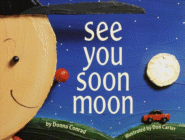
See you Soon Moon
Simple story for those sick of reading Goodnight Moon, or at least want and alternative on other days of the week. It's the illustrations I love in this book--they're like frosting.

Mordant's Wish A heartwarming book about a mole who wishes for a friend and how the wish comes true. With soft illustrations to match this book is truly lovely.

Tuesday, January 30, 2007

Little package

Last week when I went down to check the mail I got goosebumps.


There was a little package from Illinois, from a farm I contacted in the course of my research for Priscilla and the Hollyhocks (the book I am illustrating right now.) The story is about a girl sold into slavery, who carries hollyhock seeds around with her as a sign of hope and connection to the place where she is from. Its a true story, and eventually the real Priscilla settled in Illinois, where she planted her seeds.


This is what was in the package. They are seeds harvested from the town where Priscilla planted her hollyhocks 150 years ago. Descendants of the flowers she coveted. I can't help but get shivers when I look at them, it makes the story so real in my mind, and gives purpose to my ridiculous 7 day a week painting schedule.


Now when I paint Priscilla, I keep a little dish of the seeds on my desk. They remind me of her courage and poetry.

Sunday, January 28, 2007

A weekend retreat

I've just returned from the Kindling Words retreat in beautiful, snowy Vermont. This was my fourth consecutive year attending, and I hope to continue to return every year in the future. The long weekend leaves me tired but happy, rejuvenated, and inspired. This is a retreat like none other, the one retreat I've found where as an editor, I am allowed to participate not as a faculty member, not as a speaker, not as a critiquer, but simply as an attendee. It's where I can gather with fellow children's book professionals--published authors, illustrators, and fellow editors--and talk craft, talk children's books, talk life, and not talk business if I don't prefer to. Over the years, I've made many dear friends, and it's wonderful to see familiar faces and meet new people.

This year's retreat started with the drive up to Vermont with my friend Katie Davis--a fun, five-plus hour drive up with nonstop chatter that helped me kick off the retreat, but also made me realize that I had done absolutely none of the recommended reading for the weekend. But Katie got me caught up with summaries of the books, and told me about two of her good friends who would be attending for the first time, Laura Ruby and Patricia McMahon.

Arriving at the Inn at Essex we immediately ran into the latter as well as Leda Schubert and National Book Award finalist Nancy Werlin. Ran into a group who had just flown in from NY, including editor Harold Underdown and Class of 2K7 member Rebecca Stead who I saw at a kid's lit drinks gathering a few months ago. On to the cocktail hour where I was greeted by Tanya Lee Stone and Marnie Brooks, ran into Susannah Reich and her husband Gary Golio who I signed up for a picture book biography of Bob Dylan last year. Yolanda Leroy (who I interned under at Charlesbridge--along with Harold) was there for the editor strand, and I said hi to my buddy Donna Freitas who I had met for the first time at Kindling Words last year when we bonded on our love of desserts. We've hung out with for many yummy sweets in New York throughout the year, including a trip to Magnolia bakery, and then Max Brenner: Chocolate by the Bald Man a few weeks ago. Co-founder Alison James, Janie Bynum, Elise Broach, Ashley Wolff, Gregory Maguire, Ellen Wittlinger, Janni Lee Simner, Diane Mayr (whose hilarious Run, Turkey Run is finally coming out this Fall with Walker), Anik McGrory... the name-dropping can go on and on and on, and there were about seventy-five attendees, so I'll stop now.

Part of what I love about Kindling Words is that everyone there is published (or at least under contract), and yet although the level of perceived "success" varies--some are just starting their children's book careers, some are more established, some old, some young, mostly women (but more men this year than ever before, including Mark Shulman--who gave me a tip on where to find the best mac and cheese in NY--and speaker Tim Wynne-Jones), the overall environment is friendly and supportive and warm, and everyone learns from one another.

I was fairly "good" this year and made myself wake up at 6:30 am both Friday and Saturday mornings to work out before breakfast, which allowed me to stuff myself silly all weekend without too much guilt. The inn is the home of the Vermont Culinary Institute, so the food was fantastic and I had dessert for both lunch and dinner every day.

Tim's author strand was fascinating, as he talked about "objective correlative" or OC, a term I had never heard of before, although the concept itself wasn't foreign. Basically, he talked about how to avoid the "f-word" (feel) and instead show what a character is feeling using the setting and the objects around her.

Caldecott-Honor winning illustrator Marjorie Priceman led the illustrator strand, and it was a pleasure to see the proof from her upcoming book. I didn't attend the illustrator strand after the first day, because the editors chose to meet for extra sessions instead, but it was great to finally meet her in person. Her book Froggie Went A-Courting had come out with my company right around when I started as an editorial assistant, and we had corresponded here and there about her book. She also now lives down the street from our former associate art director Billy Kelly in PA, and we talked about his music and his beautiful family.

Unfortunately, I ended up taking a nap after dinner and oversleeping, missing most of Virginia Euwer Wolff's keynote speech on point of view, but managed to come in for the last bit and listened in on the lively discussion at the end.

The editor strand was the best-attended it has ever been, with seven editors attending, including Harold, Yolanda, me, co-founder Mary Lee Donovan and speaker Deb Noyes Wayshak from Candlewick, Julie Romeis from Bloomsbury, and Arianne Lewin and Margaret Cardillo from Hyperion. Everyone was excited to have the opportunity to talk to fellow editors at different stages of their career and at differently-run companies. Some of the topics we tackled were salaries (using an anonymous technique that Mary Lee had learned, we discovered that our average salary was $50,500. This includes the salary of an editorial director, an executive editor, two senior editor, two editors, one associate editor, and one assistant editor), author-editor relationships, negotiating with agents, our editorial process, how to balance work and life, how to prevent burnout, what makes a good boss/assistant, and more. The editor strand is the only closed session at the conference, but we did have an editor roundtable that everyone sat in on where we discussed publicly some of these issues.

Saturday night was the traditional candlelight reading where twenty authors read five minutes from a work-in-progress or not-yet-published book. The readings as always were varied and wonderful--humorous picture books, poignant YA novels, historical fiction, chapter books, fantasy, etc. And then it was on to the bonfire where we drank hot chocolate, toasted marshmallows, sang songs, and burned pieces of paper where we wrote something we either wanted to get rid of, or a wish for the year. I wrote down one bad thing and three good things. And when we got too cold, we retired to the hospitality suite for wine, cheese, and conversations ranging from everything from what we thought of the recent ALA award-winners, certain agents, works-in-progress, and even drugs (whether it's okay to mention them in a Middle Grade book, that is).

I look forward to Kindling Words every year. For me, it's about burnout prevention; it keeps me inspired in my job. It was especially exciting this year to find that all of the editors seemed enthusiastic about coming back if their companies allow it. We also discussed having a summer retreat somewhere between Boston and New York, a weekend with just editors. If you're an editor reading this, let me know if you'd be interested in participating. We're thinking Friday night till Sunday, sometime in late July or August, nothing too expensive. And also please consider attending Kindling Words next January--we really want to keep the editor strand growing. There is no pitching of books to the editors, and in general most attendees already have their editors and publishers, so there is no pressure to try to sign people up. It truly is a relaxing atmosphere. And if you're a published author or illustrator, I highly recommend attending KW as well. It's a wonderful retreat and an inspiring experience.

What's With These Packaged Books?

From our guest blogger, SaraOC who works at a book packager:

"Packaged books" seem to stir up controversy whenever they are mentioned, especially fiction books. But as an editor and storyliner of packaged books, I can't help but try to show the sensible, steady and smart sides of the business. I came from a traditional editorial job into my current one, and absolutely brought prejudices about what kind of novels a book packager could make. Over the past two years, however, I have been constantly amazed at the talent and integrity of the people that I work with and the quality and variety (and fabulousness) of the books we publish.

As for how a book actually gets packaged, I can only say how my company does it. Book packaging is done differently by lots of different companies in the US and the UK, and I can't comment on how they do it. I should probably also say that all of this is my opinion and not necessarily that of my company.

How a Book Gets "Packaged" (more or less):

"The germ"
Sometimes the germ comes from the depths of one person's brain, and other times it comes out of a group brainstorm. We also have publishers approach us with germs of their own to develop. Germs can be anything from "something about dolphins" to a series title or even a fully fledged opening premise. Everyone at the company comes up with these ideas, and anyone can take it through the development process.


Sometimes I develop my own germs, and sometimes I develop other people's. We have an amazing creative director who has series ideas as easily as he breathes, and I love working up his germs. Usually, the germ gets written up into a one-page document for the next stage.

New project brainstorming
This is my favorite part of my job. We have a cozy conference room with a floor-to-ceiling library of all our books to keep us company as we discuss directions for the project to go, in general terms or plotting out the first storyline. There's a company policy that no meeting can last longer than an hour (hooray!), but occasionally we do get swept up in an idea and go on longer. What comes out of these meetings might look nothing like the original concept – which can be good but it can be frustrating. But it is such fun when someone blurts out something like, "What if he only has one arm?" and poof! A new character is born. (After further brainstorming, we realized that particular villainous character was only pretending to have one arm.)

All of our projects are built by the team, and we don't accept any outside submissions at all. The company keeps copyright on all the books and concepts because the ideas come from us.

Building a proposal
After one or several brainstorms for the new project, if the idea feels good and "looks like it's a go-er," the idea is developed into a proper proposal with the title of the series, the age range, a character list, a complete synopsis of the first book and short ideas for the continuation of the series. Our storylines are anywhere from 25% - 50% or more of the intended length of the book. The proposal will go through many drafts and edits until everyone involved on the series is happy that it's ready. This can take anywhere from a month or two to (ok I'll admit it) a year (and counting)!

Finding a writer
Once the proposal is ready, we start looking for a writer. We don't actually write the book in house, though occasionally an editor will audition for a series alongside other writers. We have a database to search through of writers who have contacted us. We look for writers who have interests that match the series we've developed and we also contact agents. Once we've got a list of writers to approach, we ask for a two or three chapter sample, to be based on the detailed storyline and brief we provide. For a new project we usually ask 5 – 8 writers for a sample. We don't pay a fee to writers for their samples, but we do give detailed editorial feedback which one sampler dubbed "a mini-writing workshop". We pay an advance and royalty to the writers once they are chosen. We work with unpublished writers looking to break into the industry as well as successful, established authors.

Finding a writer is my second favorite part of my job. It's truly amazing how each set of chapters are completely different and yet all based on the same storyline. Everyone has a unique approach and it's so exciting to read the samples and find the perfect voice for our new series. Once we've chosen the writer, we'll normally ask for one revision on the chapters and then edit it in house to complete the proposal.

Pitching the project
Once ready, the sample chapters along with the proposal document are pitched to various publishers by our fantastic managing director in the US and UK, in the hopes that we'll sell it. Not all of our series sell, but I'm proud to say that most do. Once we get a contract with a publisher, we contract the writer. Depending on how quickly publishers want to launch the series, we might sign up one writer for the whole series, or two or more in order to deliver on time. It's our job to make sure the voice of the series remains consistent.

Writing the manuscript
Usually, we ask the writer to take our synopsis and break it into a chapter breakdown. Then it's the typical first draft, feedback and second draft. Often, we only need two drafts, but sometimes with brand new series, we'll need a third draft (or more!). Then, we do an in house edit and send it off to the publisher for their comments/changes. Our aim is to deliver a ready-to-publish manuscript to the publisher. We don't have anything to do with the covers or the illustrations, though sometimes we're asked for a brief for the illustrators (hair color, clothing, etc.) It's so interesting to see how different art departments at different publishers handle the design. A confession: I do miss working with illustrators and artwork as I could in my old job, but it does make sense for us to be focused entirely on the text.

To be continued…
Our contracts with publishers are usually for more than one book, so that means that work on the different books in a series will overlap. We'll be writing up the synopsis for book 2 while book 1 is being written. Or we'll be reviewing proofs for book 3 while we're reading through the second draft of book 5. Of course, every editor is working on a number of projects (I'm currently working on 6 sold projects and 3 in development) so there's always something going on.

At the end of the process, we have high quality, exciting books that we hope make their way into the hands of young readers. So far, it seems, they do.

________________________________________________________
Our guest blogger, SaraOC says, "I left my dream job in kids' publishing in New York City to follow my heart to London. Luckily, I landed the boy and another dream job. I'm currently reading Jeremy Fink and the Meaning of Life by the fabulous Wendy Mass and, in my spare time, I'm learning to carve a totem pole from a block of mahogany."

Saturday, January 27, 2007

#1 and Gracious

I met John Grisham yesterday. It happened while I was in Charlottesville for a school visit,


(This is me, Libby, at Anna’s old high school!)

My friend introduced us (mentioning that I was an author). This must happen to him constantly, but he shook hands and asked about my work and when I had received “that first phone call—no one ever forgets that.”

Of course I switched the subject to him and he said his agent had sent his book to over 30 people by the end of the first year; they were about to give up at the end of the second when someone, “not a well known publisher,” finally bought it.

“Did you cry?” I said.

He thought about the question – really thought – and then said no, but that when he did get really “choked up” was when THE FIRM reached number one on the best seller list. He said it had been climbing up – and when his agent called him to say it had reached #1,

“I had to go for a long walk.”

Then he shook my hand and said he hoped that happened to me someday.

He talked to us for maybe two minutes – but in that short time, he managed to be interesting, sincere, and inspiring. He made me feel like an equal and as though the conversation was interesting to him, too. Let’s hope that if any of us become that famous (I’m rooting for all of us!) we will be equally gracious when other writers are introduced.

Friday, January 26, 2007

POETRYFRIDAY: Poems by Dorothy Aldis

Up here in Massachusetts, we haven’t had much in the way of winter weather this winter…that is, until recently. As I begin writing this Poetry Friday post on Wednesday morning, the ground outside my house is covered with a thin layer of snow and the meteorologists are predicting that temperatures will dip down into the “teens” by Friday. So…I have decided to go with the present winter weather flow and give you some seasonal poetry written by Dorothy Aldis (1896-1966).

When I first started teaching—almost forty years ago—it seemed as if poems written by Aldis were included in nearly every general children’s poetry anthology that was available in my school library. Her poems still show up occasionally in anthologies today. One of David McCord’s favorite Aldis poems, Little, is included in Elise Paschen’s POETRY SPEAKS TO CHILDREN, which was published in 2005. (I just picked this book up the other day. It includes a CD with poems read by some of the poets.)

The following poems—Winter, Ice, and Snow—can be found in EVERYTHING AND ANYTHING, which was published by Minton, Balch & Company in 1927. Ice and Snow—renamed On a Snowy Day and with a few changes in wording—can also be found in THE SECRET PLACE AND OTHER POEMS—published by Scholastic Book Services about four decades later.


WINTER

The Street cars are
Like frosted cakes—
All covered up
With cold snow flakes.

The horses’ hoofs
Scrunch on the street;
Their eyelashes
Are white with sleet.

And everywhere
The people go
With faces TICKLED
By the snow.


ICE

When it is the winter time
I run up the street
And make the ice laugh
With my little feet—
“Crickle, crackle, crickle
Crrreeet, crrreeet, crrreeet.”

(How’s that for a little onomatopoeia?)


SNOW

The fenceposts wear marshmallow hats
On a snowy day;
Bushes in their night gowns
Are kneeling down to pray—
And all the trees have silver skirts
And want to dance away.


ON A SNOWY DAY

Fence posts wear marshmallow hats
On a winter’s day.

Bushes in their nightgowns
Are kneeling down to pray.

And trees spread out their snowy skirts
Before they dance away.


Which version of the third poem do you prefer?


To read more poetry written by Dorothy Aldis visit Mother Goose Caboose—Rhymes & Poetry.