
Showing posts with label interview. Show all posts

Monday, May 09, 2011

Q&A with Designers


Greetings from Melbourne! Well, Geelong, to be exact. I've been here since Friday morning, and am slowly getting over jetlag. I'm staying with old friends who used to live in NY and am having a great time--getting a taste of what normal life is like, combined with a bit of sightseeing, too. Today I'm off to Melbourne to have lunch with author Karen Healey and her Australian editors at Allyn & Unwin.

Before I left NYC, I arranged a Q&A with two of our fantastic Associate Art Directors at Little, Brown Books for Young Readers. Thank you so much to Tracy Shaw and Alison Impey for answering some questions! Note: they both answered these questions independently, but I loved arranging this so it seemed more like a conversation--I thought it especially telling that they answered question five in the exact same way.


1) Please list five books you've designed in the last two years.
Alison:
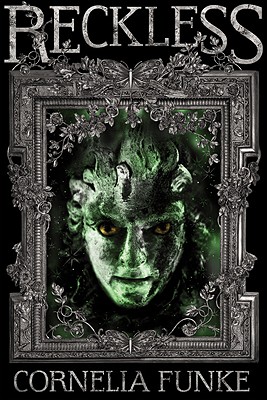
The Time-Traveling Fashionista by Bianca Turetsky; Huntress by Malinda Lo; You Killed Wesley Payne by Sean Beaudoin; Ninth Ward by Jewell Parker Rhodes; Reckless by Cornelia Funke.


Tracy:
Bunheads by Sophie Flack, Sisters Red by Jackson Pearce, The Daughters series by Joanna Philbin, Jane by April Lindner, The Duff by Kody Keplinger

2) When you're coming up with concepts for a novel cover, what are the steps you go through?
Tracy:
I start with reading the manuscript and making notes along the way of anything that catches my attention, maybe a visual detail or poetic description. Anything that strikes me as interesting, no matter what it may be. I meet with the editor to discuss what he/she is envisioning for the book's positioning and audience. I then mock up rough covers using anything I can to get my ideas across, from stock images to random magazine ads or even sketches I do myself. I also try to come up with mood boards if the concept is hard to show, to convey an idea without the actual final image. If necessary, I pick illustrators or photographers whose work best matches the overall mood or feeling I'm trying to get across.

Alison:
I usually meet with the Editor before I read the manuscript. This initial meeting is quite brief and the goal is to make sure I understand all the necessary positioning details and expectations for the book. What is the target age group? Does it have more boy or girl appeal? Is it literary or commercial? These are just a few of the positioning questions we'll discuss. 

I love sitting down to read a manuscript for the first time. I don't usually take notes while I read, but as soon as I finish reading I make a list of all the themes in the book. I focus on the mood and tone of the book and jot down everything and anything that comes to mind. I then collect imagery and inspiration that supports the list. This becomes my "mood board" and my point of reference once I begin sketching and concepting. I find it's helpful to keep a brainstorming trail so that I can always go back to it when I get stuck or concepts don't get approved. You often cycle through the concepting process more than once before you get something approved.

3) What is the most unusual place you've found inspiration for a cover?

Alison:
I enjoy browsing bookstores and seeing what's new, but when it comes to searching for inspiration I like to go to places where I can be more indirectly inspired. I can't think of anything that unusual, but I like getting away from my computer and heading to art galleries and museums. I also like looking a fashion and art magazines. Sometimes it is simply the color or the composition of something that inspires me. I also love cosmetic stores, particularly Sephora for packaging ideas.

Tracy:
Sometimes an image will pop into my head in the initial read of the book and I won't be able to forget it, no matter how many other ideas develop. But the weirdest places I've found inspiration would have to be either a chewing gum ad or a perfume sample label.

4) You both have designed novels and picture books--do you have a preference on which type of project you enjoy working on most? How about Middle Grade vs Young Adult?
Alison:
They are very different design projects, and honestly, I like both for that very reason. At the moment I work on mostly novels, both YA and Middle Grade. Compared to picture books, I find novels to be more conceptual projects. You really do feel like you're staring at a blank canvas when you start thinking about the cover for a novel. Picture books are more about the development and art direction of the interior before you even begin to think about the cover. As for Middle Grade vs. YA, I find you can be a little edgier with YA, but I must admit I like both. I like having a mix of projects. I wouldn't want to only work one or the other. It keeps things interesting.

Tracy:
Picture books are so much fun to work on - the interaction with the illustrator and seeing original artwork up close is incredible, and being able to merge the story with the images is such a poignant development in the process. They also serve as a nice break from the challenges that come with designing novel covers. But I'd have to say novels are my favorite, they allow the designer to be more involved in the concept and creation of the cover image.

With that said, I happen to like YA better than middle grade, only because I'm more comfortable with it. For me, middle grade is a tough genre, being in between picture books and teen dramas with more adult content.

5) What are your greatest challenges in terms of your job?
Tracy:
Making everyone happy.

Alison:
Making everyone happy. Ultimately I want the author to be happy, but it's also necessary for the editor, sales, marketing, etc. to all be on board with your idea. It's incredibly subjective and a lot of times your favorite ideas end up on the cutting floor, but that comes with the territory and you develop a pretty tough skin. 

6) What do you like best about your job?
Alison:
Working with incredibly creative and passionate people. I love being part of the storytelling process. You might not judge a book by it's cover, but the cover does play a huge part in whether or not you pick it up in the first place, and hopefully once you do you feel like the design enhances your reading experience.

Tracy:
When you figure out a perfect way to design a cover so it lets the book shine, that really is an awesome, satisfying feeling. Also, being able to hire new artists, they have so much enthusiasm. It's contagious.
7) What does a typical day in the office look like for a designer?
Alison:
Well, it definitely begins with a cup of coffee. It's really a lot of juggling. You always have a lot of projects that are at various stages of completion, so while it may seem like every day is about coming up with great new cover ideas, a typical day also includes a lot of follow up with artists, editors, production, etc. It's busy. 

Tracy:
A typical day involves correspondance with editors and production, checking on the various stages of my books, scheduling meetings, organizing photo shoots, and oh yeah, trying to squeeze in time to concept. That can be the most challenging when what you need is just time to think.

8) Anything else you'd like to add?
Tracy:
This is a job where you have to put yourself out there, and the insecurity and doubt can be overwhelming. But it's also what makes the work so gratifying and why I'm still doing it after eight years.


Alison:
Thanks, Alvina!

Thank you Alison and Tracy! I love hearing how people work--I learned a lot!


Monday, March 28, 2011

Two interviews, plus self-publishing vs. traditional publishing


Two interviews:
I had the wrong link for my interview with Jenny Han in my "Beyond the Book: CLARA LEE AND APPLE PIE DREAM" post last week. I've now fixed it; find the interview here.

Jerry Spinelli's Maniac Magee was recently named an "Essential Book for Children" by Amazon.com, and Jerry recorded a special introduction for the occasion. I also did a short Q&A with Jerry. (Now, I'm usually pretty comfortable recording these kinds of things, but for whatever reason, I felt really awkward during the interview. I sound like a robot. But Jerry is wonderful, of course!) Listen to both on the Amazon book page here. (under "check out related media.")

Self-publishing vs Traditional publishing:
So, have you all been following the news going on with the author Amanda Hocking? She's an author who writes paranormal romance for teens, and has thus far achieved amazing success self-publishing her books as eBooks. This is a good introductory blog post for you to read to find out who she is and why everyone started talking about her.

And here's a NY Times article about the breaking news last week. Basically:

Amanda Hocking, the 26-year-old author who shot to fame by selling more than a million copies of her self-published books, has signed up with a traditional publisher for her next series.

The traditional publisher was Macmillan. This news broke just days after we found out that bestselling thriller writer Barry Eisler chose to leave Macmillan and turn down a half a million dollar deal to self-publish. Read a fascinating interview with Barry Eisler here. He also addressed the Amanda Hocking news:

A lot of the Twitter conversation I've seen regarding the news has been of the "Which one is right?" variety. And at the risk of sounding a little harsh, I have to say, it's a pretty stupid question. Publishing, legacy or indie, is a vehicle, and you can't opine about whether someone has chosen the right vehicle if you don't know where she intends to drive it.

Very true. I was thinking that the decision to self-publish or go the traditional publisher route can be compared to the "agent or no agent" debate. For some people, I think it makes sense to not have an agent. For others, having an agent is absolutely necessary. Some people enjoy the business side of publishing more than others. Some enjoy the marketing side more than others. Some are better at it. Everyone will have their own priorities and goals. Amanda discussed her reasoning for accepting a deal with a traditional publisher here.

Monday, April 09, 2007

Seven Impossible Things interview

It's been a fun, packed weekend once again, and this one included another fabulous trip to Mystic to visit Libby for a Blue Rose Girls Easter celebration, including not one, but TWO Easter egg hunts. But I didn't get back to NY till late last night and even though I have a lot of things I want to blog about (I was asked to write about this Library Preview from the editor's point of view, I have a bunch of Spring books that are out now that I'd like to talk about, and I also want to continue my "How I Know" series...), I'm a little too tired right now. I'll try to write more later today or this week, but for now I'll leave you with my Seven Impossible Things to Do Before Breakfast interview which was just posted today.

Go here.

Thanks Eisha and Jules! That was fun.

Sunday, March 04, 2007

SNEAK PEEK: Janet Wong & Julie Paschkis

If you haven’t read my interview with Janet and Julie yet, I suggest you check that out before you read today’s post.


Interview Addendum

Elaine: Does either of you have any other books that will be published in 2007?

Julie: I am very excited about a book I illustrated that is coming out later this year from Henry Holt. It is called GLASS SLIPPER, GOLD SANDAL: A WORLDWIDE CINDERELLA and it was written by Paul Fleischman. It weaves together Cinderella stories from all around the world. It will be released in September.

Janet: Do you know about BEFORE IT WRIGGLES AWAY, my Meet the Author book (Richard C. Owen Publishers) that came out in January of this year? It's still not available through amazon.com (groan), but RC Owen sells it directly:
http://www.rcowen.com/MTA-JanetWong.htm


A Sneak Peek at a “Potential Project” from Julie and Janet

Elaine: Do the two of you have any plans to collaborate on a fourth book that you'd be willing to share with us?

Janet: Julie and I currently aren't actively working on a new collection but on a possible collection. Let's see if Julie is interested in "going public" with that, though, since it's still very tentative...

Julie, do you want to share an image from your Liberty Notes along with one or two of my DECLARATION OF INTERDEPENDENCE poems?

Julie: I'm happy to talk about this possible project! I've attached two of the images illustrating the 1st amendment (freedom of speech) and 4th amendment (freedom from unreasonable search and seizure) from a series of cards I made and sell to benefit the ACLU. The National Endowment for the Humanities recently used one of the images (The Pursuit of Happiness) in a library program they have.

Janet: Here's the text of the poems "Liberty" and "Declaration of Interdependence," both written to go with Julie's Liberty Notes (and hoping that they will be part of a fourth book called DECLARATION OF INTERDEPENDENCE):

Freedom of Speech

Declaration of Interdependence
by Janet Wong


We hold these truths to be not-so-self-evident

(but think about them a while, and hopefully you might agree):


all men are created equally a puzzle, made up of so many parts;

each of us makes up part of the greater puzzle that is our nation.


Lose one piece and the picture is incomplete. Recognizable, but

what happens when too many pieces, one by one, become lost?


Life, Liberty and the pursuit of Happiness: do your best to find

the pieces that fit, that need you, as much as you need them.

Freedom from Unreasonable Search and Seizure

Liberty
by Janet Wong


I pledge acceptance

of the views,

so different,

that make us America


To listen, to look,

to think, and to learn


One people

sharing the earth

responsible

for liberty

and justice

for all.


Elaine: Janet and Julie, Thank you so much for the wonderful interview and for an inside look at your collaborative process that brought us TWIST: YOGA POEMS—your third fine book of poetry and art. I do hope the “possible” project that you two have been working on gets published in the not-too-distant future. It looks like a great book in the making!

A Few More Words

I’d like to tell everyone how much I enjoyed conducting my “interview via email” with Janet and Julie. They responded promptly to all my questions and were so forthcoming with information about their author and illustrator process for TWIST: YOGA POEMS that writing up the interview for Blue Rose Girls was easy—easy once I color coded their responses in my Word document draft.

I should tell you, too, that it was Janet who suggested I include Julie in the interview. I had originally planned to write a blog interview with Janet about her poetry books. When I saw a copy of TWIST, I wrote Janet to tell her how much I liked the book—and Julie’s gorgeous illustrations. So Janet asked Julie if she’d participate with her in an interview about the book. How lucky can a blogger get?

Two Other Great Poetry Books by Janet and Julie

NIGHT GARDEN: POEMS FROM THE WORLD OF DREAMS (2000)


KNOCK ON WOOD: POEMS ABOUT SUPERSTITIONS (2003)


(Both of these books were published by Margaret K. McElderry Books.)

Friday, March 02, 2007

POETRY FRIDAY: Yoga Poems


TWIST: YOGA POEMS
Written by Janet Wong
Illustrated by Julie Paschkis
Margaret K. McElderry
(2007)


What a gorgeous book! Julie Paschkis outdid herself with her art for TWIST, a poetry collection written by Janet Wong. I thought YELLOW ELEPHANT was one of the best-illustrated children’s books of 2006. I know it’s early March—but I think TWIST may well be one of the best-illustrated books of 2007.

This is the third book of poetry written by Janet Wong that Paschkis has illustrated. NIGHT GARDEN: POEMS FROM THE WORLD OF DREAMS, the first collaboration between Wong and Paschkis, was a stunner. It was designated a New York Times Best Illustrated Book of 2000 and a National Council of Teachers of English Notable Children’s Book. Their second book, KNOCK ON WOOD: POEMS ABOUT SUPERSTITIONS, was a Riverbank Review Books of Distinction Finalist. Needless to say, I waited with anticipation for my review copy of TWIST to arrive from the publisher. As soon as I looked at the front cover and read the first poem, Breath, I knew I had in my hands another wonderful pairing of art and poetry from these two talented and accomplished women.

TWIST is a collection of poems about different yoga positions. There’s nothing fussy or pretentious about Wong’s poetry in this book. With well-honed writing and lyrical language that is accessible to young children, she captures the poetic essence of the yoga poses and creates tangible images of sixteen different body positions—including Warrior, Tree, and Crow. Paschkis’s vibrant watercolor illustrations are striking and meld into a visual harmony with Wong’s fine text.

This is an attractively designed book. The format of TWIST suits the subject matter of the poetry perfectly. Each two-page spread includes a poem that explains the meaning of a particular yoga position and a painting that illustrates that position. Both the illustration and the poem are set inside frames of the same size—with the illustration on the left-hand page and the poem on the right-hand page. This gives the effect of the poem and the painting being mirror images of each other. The framed paintings are set inside larger border-like illustrations, which also mirror each other. These larger illustrations include design details that extend the yoga theme of each of Wong’s poems.

Here are three examples from the book to show you how the art and text work together so beautifully to provide us with a unique artistic and literary interpretation of yoga.


From BREATH


Breath is a broom
sweeping your insides.

Smooth and slow:
You pull scattered bits of dream fluff
And heart dust into neat piles…

Breath is a broom
sweeping you fresh.


From TREE


Trees watch.

This is why
they grow tall,
this is why they bend
and sway,
so they can see around
a house, over a hill,
beyond a fire…

At the tip of each branch
there is an eye.


LOW CROW


Crow depends on his elbows.

You cannot always fly.
You need to rest
the weight of yourself.


TWIST has the elements that I look for in an illustrated poetry book for children: well-written poetry with a new “twist” and art that not only adds visual interest to the book, but also adds another dimension to the author’s text.


An Interview with Janet Wong & Julie Paschkis

Janet and Julie were kind enough to let me interview them about their most recent collaboration on TWIST. Here’s a little background information first: Julie and Janet are friends. They met through Laura Kvanosky, author of ZELDA AND IVY: THE RUNAWAYS. Each of their three books has been submitted as an author/illustrator package, which is pretty unusual in the publishing world.


Elaine: Janet, in your Author's Note at the end of TWIST, you tell readers that you wrote the poems for Julie, who loves yoga and loves to stretch. Did you just sit down one day and decide you were going to write these poems for Julie...or was there something in particular that inspired you to so? I’d also like to know if you practice yoga.

Janet: Even though it has been years (and pounds) since I have practiced yoga, I did do the poses as I wrote the poems. I think my dog Nissa found it quite strange to see me typing away on the computer, then flopping suddenly down on the floor, stretching, then hopping back up to my desk for more typing. I'd be straining on the floor and she would come and lick my face in encouragement (or maybe sympathy).

I don't do enough exercise, and it was very good for me to have a reason to "have to" do yoga (apart from the health and spiritual benefits). One review suggested that this book was inspired by the "current yoga craze" but, actually, I started writing these poems in 2002, after Julie finished the paintings for KNOCK ON WOOD, and finished the poems in 2003. I was so pleased with what Julie had done in that book and wanted to give her another project, an "irresistible project." I chose yoga, knowing that she is passionate about yoga and practices it several times a week. I was a bit worried when I started seeing children's yoga books coming out. With each passing year, I worried that "the market" was disappearing. But this isn't a how-to book. I'm hoping that kids who have learned yoga will stumble on this book and feel a jolt of excitement at discovering a celebration of an important part of their lives.

Elaine: Julie, did you enjoy illustrating this book of poems that Janet wrote especially for you?

Julie: TWIST was great fun to illustrate. I do a lot of yoga so I felt like I knew the poses from the inside out (less googling than usual for reference). Janet's poems were surprising and just right. So many of the poses have animal names. She pushed those connections in ways that brought imagery to mind that was fun to paint. Now when I do yoga poses I often think of lines from her poems. I will be in cat pose and suddenly think of a pleasant bowl of cream.

Elaine: Janet, reviewers of TWIST have noted the variety of ethnicities Julie depicts in her paintings. Was this something the two of you discussed before she did the art for the book?

Janet: I like the fact that Julie varies the ethnicity of the children in our books. We have never discussed this with each other, but I feel it is very important for kids to see a variety of looks. Not just different races, but different hairstyles and body shapes. I'm happy to have inspired the roly-poly round-bellied "jelly doughnut" of a girl in the poem "Finding the Center" in TWIST. There's a secret truth in that painting that Julie didn't intend: the green apples in the foreground (painted by Julie to symbolize envy), actually (in my mind and personal history) symbolize Asians. When my grandfather learned that I was dating a white man (who later became my husband), he said, "There are green apples, red apples. We are green apples. But you need to try all kinds." My grandfather was about 85 years old when he told me this. He was quite poetic, a natural storyteller—and a very wise man.

The Jelly Doughnut and the Green Apples


Elaine: Julie, would like to speak to this diversity represented in the books you have illustrated for Janet?

Julie: I always want to include lots of different ethnicities so that children can see themselves. But also that reflects reality; on my block alone there are Indian, Chinese, Korean, Hispanic, black, white, and mixed race children.

Elaine: Julie, where did you get your inspiration for the art in TWIST?

Julie: I looked at a lot of Indian miniatures as I did the illustrations for TWIST. Since yoga comes from India it made sense for those pictures to influence the art in the book. I studied the miniatures for the colors and for the way space is divided up. I love how saturated the colors are in the Indian paintings. One interesting fact that I learned is that the intense yellow pigment in the miniatures was made from feeding mangos to the cows and then making paint from their dried urine. (I didn't use that technique.)

When I painted the clothing and the borders I looked at the Indian miniatures, at paintings of people in Indian clothing and at a Dover book of paisley patterns. I put all those ingredients in my head and painted the patterns based on those inspirations; they aren't exact copies of anything. I tried to make the patterns fit the poems. For example, in the illustration for the poem Triangle all of the patterns on the clothes are based on the triangle shape. Or in Cobra the border and clothing have lines that snake around.

Elaine: Janet, tell me about your author-illustrator relationship with Julie and why you love working with her.

Janet: Perhaps the most amazing thing about Julie is that she has made each book of ours significantly different from the last. People who look quickly might not notice the little differences, but all together they add up to something quite important.

For instance, NIGHT GARDEN: POEMS FROM THE WORLD OF DREAMS had no glossary of "dream interpretation" at the back. I thought that was fine; Julie, too, wanted to emphasize the poems and not distract the reader with psychobabble. Why, then, did we include "back matter" in KNOCK ON WOOD: POEMS ABOUT SUPERSTITIONS? Julie's curiosity about (and even, I would say, fascination with) superstitions, as well as the folkloric element of her paintings, led me to justify including a glossary (of sorts) at the end of the book. I say "of sorts" because, again, she encouraged me not to distract the reader with dry academic text, but rather to try to provide commentary that would be playful and inspire wonder. With TWIST: YOGA POEMS, I sought to replicate KNOCK ON WOOD's back matter with commentary or even instructions on the poses, but Julie was quite firm about not wanting that. I think that she has become increasingly certain with each book about how she wants it to look.

Julie is the only illustrator with whom I have this level of "back and forth"--or maybe I should say "back and back"! I like to consult her when the book is still being written, but she makes it pretty clear that I am to leave her alone to paint as she sees fit, once the manuscript is finalized.

Elaine: Julie, tell us what makes working with Janet and her texts so inspiring.

Julie: Our friendship grew out of working together. I think we spur each other on to create good work; I hope that A plus B equals more than C. I like illustrating Janet's poems because her imagery is like a diving board for my imagination. Also, her poems are subtle. When I read them over and over I notice the artistry in the construction of the poems and I find layers of meaning.


Come back on Sunday for a “sneak peek” at a potential Wong/Paschkis project!