Friday, November 24, 2006

POETRY FRIDAY: Nikki Grimes

Nikki Grimes is the 2006 recipient of the National Council of Teachers of English Award for Excellence in Poetry for Children. Grimes is the 14th children’s poet to be honored with this award since 1977. Sylvia Vardell has a story about the poetry award ceremony that was held in Nashville recently at her Poetry for Children blog. Sylvia served as co-chair of the committee that bestowed this great honor on Grimes.

(Note: The NCTE Poetry Award site has not been updated yet to include the announcement of Nikki Grimes as 2006 recipient of the poetry award.)

I thought I would acknowledge the induction of Grimes into this “Children’s Poets Hall of Fame” by looking at three of her poetry books for children.
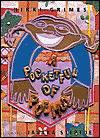
POCKETFUL OF POEMS
Illustrated by Javaka Steptoe
Published by Clarion Books (2001)


Some people aren’t big fans of sharing haiku poetry with children—they feel this type of poetry doesn’t appeal to the young among us. I think many of these same people might change their minds after reading A POCKETFUL OF POEMS. In this book, Nikki Grimes imagines a girl named Tiana pulling words like SPRING and SNOW and CATERPILLAR and MOON from her pocket—and creating paired poems about each word. One of each of the poems in a pair is written in free verse—the other poem is a haiku. Here are some examples:


SNOW

The word begins to melt
inside my pocket. SNOW.
I fling its lacy coldness
in the air, then watch it
floating there.

Magic! Evening snow-
drifts turn each streetlight into
a star on a stick.


HOT

HOT is a thirsty word that
wakes me from a deep sleep.
I leave my dreams and stumble into the kitchen.
I place the word in the sink, then
turn the cold water on full-blast.


Hot days send me to
the water fountain where my
face goes for a swim.


You can see that the haikus in this book are definitely accessible to young children. I think A POCKETFUL OF POEMS is one of the best books of haiku poetry written for children. It has an inventive format. It helps readers look at words in an imaginative way. And even though this book has a city setting (Harlem), the topics of the poems—including snow, caterpillars, pumpkins, outdoor showers, and the moon--are things common to the world of children who live in a city, the suburbs, or out in the country.

Suggestion: This book could serve as a springboard for a creative poetry writing activity in an elementary or middle school classroom. A teacher could have a bowl of poetry words--like those included in this book—printed on cards. Each child could pick a word and write two poems about that word—just as Grimes did in the book. The words in the bowl could be changed as the seasons change, as the subjects being studied in the classroom change. Teachers could encourage students to make their own word cards to add to the poetry word bowl.
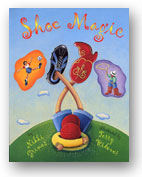

SHOE MAGIC
Illustrated by Terry Widener
Published Orchard Books (2000)


In SHOE MAGIC, Nikki Grimes writes sixteen poems about tap shoes, football cleats, hiking boots, ballet shoes, flippers, running shoes, sandals, work boots, slippers, and other things people wear on their feet. This is an upbeat collection of mostly rhymed poems celebrating all manner of footwear. Now…footwear may seem like an odd subject for a poetry collection—but Nikki Grimes does some “magic” with the subject. It’s proof that a master poet like Grimes can write about the most mundane topics and still manage to delight us with her writing.

The second poem in this collection is a toe-tapping, fast-paced rhythmic rhyme entitled Tap Shoes.

Tap Shoes

When music starts playing
Marc hops to his feet.
His soles are slaphappy
His heels stomp the beat
His heart starts a-thumping
His hot blood is pumping
His steel toes are drumming—
Tell Broadway he’s coming!
Make way for the new
Tap
Dance
King.


The book comes to a close on a quieter note with a poem about slippers.

Slippers

Rest your soles.
Spread your toes.
Curl, breathe deep.
There now, Dreamer
Hush…
Sleep.
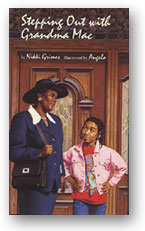


STEPPING OUT WITH GRANDMA MAC
Illustrated by Angelo
Published by Orchard Books (2001)


STEPPING OUT WITH GRANDMA MAC is a book of poems about the little things in the lives of a young girl and her outwardly gruff grandmother that add up to a big, loving relationship. It speaks to everyday experiences like Grandma teaching her granddaughter how to set a dinner table, taking her to the Garment District to show her how to spot quality fabrics and workmanship, waiting with her in line in the freezing cold at Radio City Music Hall on Christmas Eve, and passing on the wisdom of a poor woman who survived the depression to a granddaughter to whom she doesn’t express much outward affection. Still, the perceptive granddaughter is able to read the signs of her grandmother’s love that are shown in so many other ways.

The granddaughter tells the story of the relationship between her and Grandma Mac.

From Fences:

And, more than once,
I saw her eyes
Bathe me with pride.
So I figure
Grandma’s chilly words
Aren’t brick walls
Made to keep me out.
They’re more like picket fences
With gaps wide enough
For me to squeeze through—
All I have to do
Is try.


From Radio City:

I would mind more
Except that Grandma
Who normally
Avoids touching
Grabs my hand
Sticks it in
The warm well
Of her coat pocket
And holds it there
What seems like
Forever.


In this slim volume of twenty poems, Grimes is able to plumb the depths of the bond between two related females of different generations and early life experiences. We read about an older woman and her young granddaughter who, although they may not express their feelings for one another with outward manifestations of affection, understand each other and love one another deeply.

Congratulations to Nikki Grimes for receiving her well-deserved honor from the National Council of Teachers of English.

Thursday, November 23, 2006

PS (In response to KT's comment)

Maybe listening would be a better word than waiting....the book is always in my mind: characters are chattering away, the plot gets livelier or tighter, a new scene comes.... sometimes I'm just mulling something over, or trying to figure something out.

I usually wake up with ideas--I scribble them down while I'm having breakfast. Then I might go for a walk, ride my bike, or just putter around the house -- I really don't know WHAT I do in the morning and I think I waste a lot of time. But maybe it's not wasted. Who knows. At some point, though, I sit down at my computer and get to work. The actual work part is where things happen, but nothing good gets written unless I put the quiet time in first.

Once I'm actually working, I don't usually waste a lot of time (unless it's a distracted day and I DO have those: I think someone described them here a few months ago). At this point, I'm no longer waiting. By the time I sit down at my desk, I know what I want to say and the time at the computer is for saying it. Often -- usually, even -- while I'm working more details -- or better ways of doing things -- pop into my mind, and that is a rush.

But for this to happen, I need some kind of routine and stability -- money worries and big decisions are particularly deadly. I think one reason it's sometimes so hard for me to get started on a book is that once I am IN this routine, leaving it is quite disruptive. I don't want to see friends. I don't want to go anywhere. Sometimes I don't even want to wash my hair or get dressed! And this is of course an isolated way to live-- and I think pretty common for artist of all kinds: maybe not. But it is a dilemna for some of us: how do you balance things?

Wednesday, November 22, 2006

Working routine

It’s really interesting hearing about how we all tidy up and put things away and, sometimes, rearrange the furniture, files, Ikea boxes before we start new projects. It makes sense: rearranging old things in a new way, creating order out of chaos – that’s what we do when we paint or write.

One thing we haven’t talked about is very much on my mind right now: having a stable environment and a regular routine. I, at least, get my best work done when the rest of my life is in order – that enables me to concentrate. A regular routine helps, too: I’m not sure why, but I think it’s because ideas are shy (or lazy?) and think – well, why should I show up if you’re not going to be there writing me down?

So during the idea phase of a project, I spend a lot of time alone, just sort of hanging around waiting. It’s as if I have a net and am quietly waiting for the ideas to come; I’m alone and quiet because when they do, I want to be sure I’m there to catch them. It really is a lot like fishing with a net (not that I've ever done that but I can imagine it!) – a lot of waiting, a lot of patience, a combination of beign relaxed and being alert and then – there they are and it’s easy. You just scoop them up and pop them into the bag. But you can’t hurry them, you have to trust the process and not scare them away with sudden movements or fear or anxiety.

Later, of course, it’s different: once the first draft is done I can exert a lot more control, and THEN, how much I get done depends on how hard I work. But at this phase, all I can do is show up and wait for the REAL ideas, not be satisfied with empty words or tricked by easy answers.

I’m almost done with the first draft of this novel (just two more chapters of ideas to catch!) and now my landlord tells me that he’s not going to lower the rent in December as promised. I’ve never liked this place that much anyway – and so I’ve decided to just leave. I am hoping to find something super-sunny (this place is really dark), private (this place has HORRIBLE neighbors on both sides – I’ve never lived in that sort of neighborhood before), and warm (this is an uninsulated summer cottage). This new place will either have no rent (I’ll housesit) or very low rent.

I am going to try to keep fishing and get the first draft done before I start packing. If I can’t, I’ll move sooner….but just having blabbed this out has lessened the worry of it all. In a way there is not that much worry: there’s an inn down the road with an empty room – the furniture is hideous (not sure how much this would bother me, maybe a lot? I have been known to have to hide ugly paintings and knickknacks under the bed when staying in the kind of hotel I can usually afford) but the rent is low and the view is great. It might be a good place to fish and maybe while I’m there I’ll find the perfect work space.

Tuesday, November 21, 2006

Clearing the decks

I feel a little like a squirrel preparing for winter (and not because it is once again 40 degrees in Boston). I'm about to start the paintings for a picture book and hole up in my studio, my little hollow in a tree.

This involves several stages:


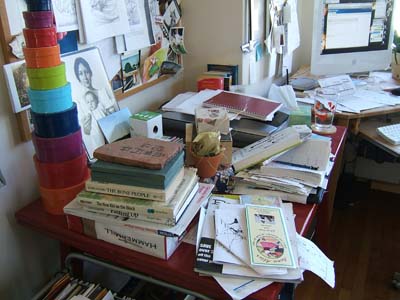
1. Getting rid of all sketches, notes, books, odds and ends that are filling up all usable table space in my studio so that I won't be distracted (above was my desk at the beginning of the day).


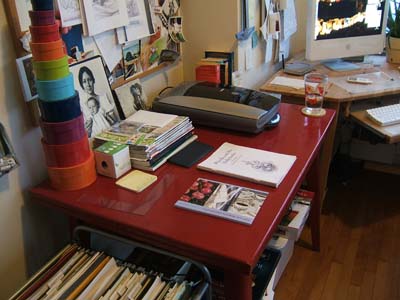
2. Now I can start filling up all usable table space with new sketches, notes, books, odds and ends that will weave their way into the illustrations for this book (this is my desk at the end of the day- I'm in OCD paradise!).

3. Settling all unfinished business that has been hanging over my head and dragging on for weeks so that I can, without guilt, completely withdraw into my head and live in the world I'm about to try and paint.

Its a little like going away to camp when you're a kid. You feel a little nervous about going somewhere new. Hopefully I will make friends with my characters and fall into a groove quickly. Then, before I know it, I'll be emerging from this cave and blinking at the sun. I am glad I have my pen pals at the BRG to send postcards to!

Monday, November 20, 2006

The Direct Approach

This is kind of bald, but in the words of Harriet the Spy:

“Where are you going tonight?” Harriet said abruptly. She couldn’t think of any way to find out subtly without Ole Golly catching on. Sometimes the direct approach was best.


So here’s the direct approach: who are you? Why do you read blogs in general and this one in particular? I’m really curious about who is reading this blog. Some of you I know from your comments, but what I wonder is: is anyone reading this and never commenting? If you haven’t ever commented, would you say something on the blog or in an email to bluerosegirls@gmail.com?

I’ll answer for myself. I’m the author of Blow Out the Moon (and pretty much as I am in the book – as a coworker once said, sounding mildly surprised: “It doesn’t seem that different from the way you talk now”)…that was a coworker in the Fidelity Investments design group (I wrote for the web site!). I've had too many jobs to count; my most recent was selling books to libarians-- not my book, other people’s: I was a salesperson. I loved talking to the children’s librarians about books, especially librarians in places like Oklahoma and West Virginia but it was commission-only and I only talked about the books I liked – mainly children’s books, which cost much less than adult books -- so I didn’t make much money.


I left the job to work full-time on my new novel (or almost full-time, I earn some money editing self-help books for adults). I read blogs to find out what’s going on in & communicate with the children’s book community (especially with the other BRGs!),to promote myself and my work, and, sometimes, I think, just to give myself the illusion that I’m doing something work-related while I’m really just goofing off. Children’s book blogs are the only ones I read. What about you?

Sunday, November 19, 2006

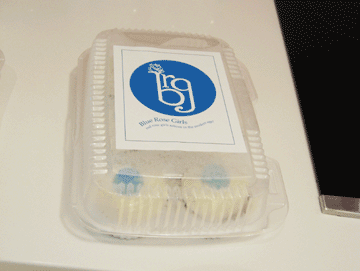
a blue rose cupcake

As the winner(s) of our first cupcake contest was announced,I thought you might like to see what it takes to make a Blue Rose Girl cupcake. These prizes are no run-of-the-mill treat. We make Blue Rose Girl Cupcakes as we do everything: planned, carefully crafted and cared for, guaranteeing a sweetness that cannot come from a box.

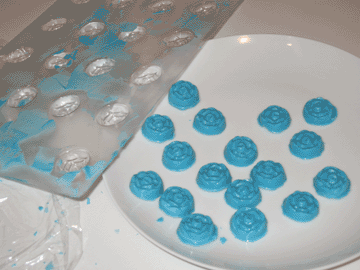
The first step is to make the blue chocolate roses. This took much thinking to come up with, as I knew icing roses would not survive. And I still can't master that frosting tip.

Then, mixing batter for the requested gingerbread with candied ginger cupcakes. The mixing is done by hand to infuse the blue rose girl tender loving care. (No, really it's done by hand because I don't own a mixer. I'm hoping Santa will bring me one of those fancy standing ones for Christmas. Maybe in pink. Or red. Or blue. Okay, I'm digressing...)

The batter is baked and they are cupcakes! Yum! By the way, the hat is stolen from my sister and I'm very attached to it. Also, it substitutes as a hairnet.

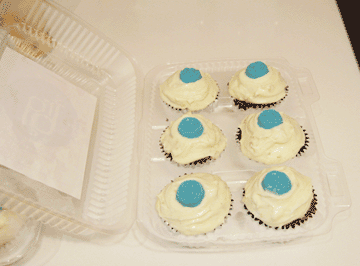
Those cupcakes are naked! Get some candied ginger frosting and a chocolate blue rose on them, please. That's indecent.

Now that's what I like to see.

Hope they'll be safe in there. Off they go express to NYC and California. Will they make it? Stay tuned...

Friday, November 17, 2006

POETRY FRIDAY: IN THE GARDEN AGAIN

On October 27th, I posted a review of BUSY IN THE GARDEN, a delightful collection of poems about sowing seeds, growing and harvesting plants, and other activities that take place in a garden or yard. It’s a book perfect for use with preschoolers and kindergarteners. Today I am reviewing another “garden variety” collection of poetry that is written for children in the primary grades.

I HEARD IT FROM ALICE ZUCCHINI: POEMS ABOUT THE GARDEN
Written by Juanita Havill
Illustrated by Christine Davenier
Published by Chronicle Books

By golly, I hate to repeat myself…but I HEARD IT FROM ALICE ZUCCHINI is another delightful collection of poems about seeds sprouting and plants growing—and all manner of garden gossip. Yep, even the seeds and plants do some talking in this collection that includes the mask poem What I Like About July in which corn tells readers what’s so special about that summer month from its perspective.

From What I Like About July:

Breezes combing the wavy tassels
of my hair,
the sparkle of my long green leaves
in the heat of the sun at noon…

But what I like most
about July
is growing
tall,
taller,
tallest,
and how everyone looks up to me.


In When I Grow Up, seeds express their dreams for the future.

From When I Grow Up:

In the still chill of a winter night
Seeds on the gardener’s bench
Rattle their packets
With chattering.

“When I grow up,
I’m going to be…”

“The biggest watermelon.”
“Greenest spinach.”
“Toughest kale.”
“A rutabaga round as the world.”…


There’s Snap Beans, a poem of address, in which the writer speaks to the little green growers.

From Snap Beans:

Snap your fingers, jazzy beans,
tap your toes,
click your heals,
strut your stuff in tight green jeans…

I HEARD IT FROM ALICE ZUCCHINI is a collection with a good variety of poetry. There are poems that rhyme—as well as those that do not rhyme. There are longer narrative poems and shorter pieces. Carrots is written in a question and answer format; Pea Pod Chant is a bouncy, rhyming chant that would be great for choral reading or speaking. And there are many poems in this book that contain a touch of homespun humor. I would add that not all the poems in this collection are of equal excellence. Still, this book has plenty to offer to those of us who like to plant the seeds of poetry with children in their early years and watch how they grow to enjoy and appreciate the genre. Sow…I do not hesitate to recommend this book.

Note: I HEARD IT FROM ALICE ZUCCHINI has been nominated for a Cybil Award. Visit the Cybil Award site to nominate your favorite children's books published in 2006.


Another Poetry Friday Wish


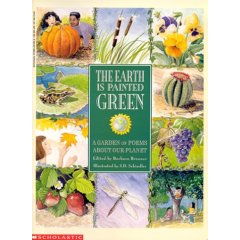
I would like to see THE EARTH IS PAINTED GREEN: A GARDEN OF POEMS ABOUT OUR PLANET back in print. This is a themed anthology of children’s poems edited by Barbara Brenner, illustrated by S. D. Schindler, and published by Scholastic (1994). It is a substantial anthology that contains ninety-one poems, many of which were written by some of America’s most esteemed children’s poets: David McCord, Lilian Moore, Eve Merriam, Mary Ann Hoberman, John Ciardi, Aileen Fisher, Myra Cohn Livingston, and Valerie Worth. It also includes the works of Eleanor Farjeon, Edna St. Vincent Millay, Christina Rossetti, Ted Hughes, Carl Sandburg, Elizabeth Coatsworth, Charlotte Zolotow, Theodore Roethke, Basho, Jack Prelutsky, and Shel Silverstein. The index of authors reads like a Who's Who of poets.

For inclusion in this book, Brenner selected a wide variety of fine poems about nature’s greenery—from the first green of spring to tree green to growing green to harvest green to the last green of the year. Many of Schindler’s illustrations, finely rendered in watercolors, are realistic representations of leaves, flowers, weeds, frogs, birds, and butterflies. To complement the lighter verses, Schindler employs a more cartoon-like style. This book is an excellent combination of poetry and art. It makes a wonderful classroom resource that can be used throughout the school year.

Thursday, November 16, 2006

reinforcement

I admit I have certain partiality to multicultural books, which is why I am always interested in reading about other multicultural authors and how they came to their path. So, Cynthia Chin-Lee's recent article on Papertigers.org is especially fascinating to me. An excerpt on the racism she faced in her own life as follows:

The most dramatic incident of my childhood happened when I was eight and my oldest brother was eighteen. Saving to go to college, Bruce got a job at the local McDonalds in Bethesda, MD, where he commuted by borrowing our uncle's sports car. His co-workers, clearly jealous of his car and his future plans, picked on him. One night, unbeknownst to Bruce, some of his co-workers followed him to our home. In the middle of the night, we got a phone call from our neighbors,"Your car is on fire. We've called the fire station." The car was destroyed as well as one of our heritage magnolia trees. Lucky for us, our house stayed intact and none of us were injured. The investigators never identified the arsonists, but the message seemed clear to our family.


To me, the role of multicultural books have never been more important than now and this article just reinforces it to me.

Wednesday, November 15, 2006

my book needs your help!

VOTE NOW!


Yes, I'm asking for your assistance. I'm looking for either a funny picture or word or sentence for the tee shirt on this person in the park and also for a title for the book she's reading.

Please help! My deadline is now!


why this bothers me

Locally, there has been a recent attempt to ban the book So Far from the Bamboo Grove. One of the reasons is because the "book is one-sided, representing Koreans as the wrongdoers when it was the Japanese who occupied Korea."

Now, I find this argument ridiculous. First of all, fiction books in general show one story and viewpoint--the narrator's. To fault the book for this is completely unjust. And even more so since this book blurs that line of fact and fiction (like I do in Year of the Dog, which is probably why this struck such a chord), as it is based on the author's personal experiences. Is one asking her to change her memories?

So, because the book only portrays one side of the story the book might be banned--therefore erasing that part of history for the students, as if it never existed. Doesn't it make much more sense to have the students read another book as well, one that tells the other side of the story? Or at least have a parent or an adult familiar with that time period to explain the intricacies of the other side?

This is similiar to how I feel about Little House on the Prairie where Ma "hates Indians." Of course that prejudice is repugnant, but to edit those lines out erases the tension that was really there. To ignore or pretend it didn't exist is worse. It's important to let kids read it, and then discuss with them why Ma felt the way she did and how ignorant it was.

In my opinion, instead spending our time banning books, we should use it to encourage responsible reading. What do you think?

Publishing by Committee

Libby normally posts on Wednesdays, but as I am going to Taiwan on Friday night for 11 days, I may be missing two of my Mondays, so you get to hear from me twice this week! Lucky you.

This conversations started during my Things I Hate post, and I thought I'd expand on it here, since it seems some questions have been raised.

We have many committees and meetings in my company to decide what and how our books get published. Editorial Meeting, Acquisitions Committee, Jacket Committee, Print & Bind Meeting (where the print run and price is set for each book, including reprints), Sales & Marketing Meeting, Portfolio Review (where the pub date and season of each book is confirmed/decided), Production Meeting, and prom committee.

Everyone laments about how big publishers are now publishing by committee, how everything is changed, how they long for the old days when editors had the power to decide what got published, and sure--part of me would love that. But part of me would also find that extremely stressful, because then the resulting sales or nonsales would be on my back. And sure, I'm still held somewhat accountable for the books I acquire, but I also know that it wouldn't have been signed up if the committee and/or the publisher did not support the project.

The truth is, publishing is a business, it doesn't happen in a vacuum, and it doesn't make business sense to allow one person to decide what does or does not get published. I rely on our acquisition committee, and even though sometimes I am distraught at the results, I know that it's better for the book to get published elsewhere if our team is not on board. Sure, I think this can possibly result in publishers taking less chances, but on the other hand, it also ensures that the chances that ARE taken (like Sound of Colors, for example) are executed well. And as I said below, it's not like these committees are comprised with cold unfeeling people who hate books. This is a publishing company. No matter what department you work in, it's likely that you came to publishing because you love books. Sales people could make more money working in another industry selling another product, but they didn't want to because they love books. So even if sometimes I blame the committee for things, for not allowing me to work on every project that I want to work on, I also respect the committee and all of the members on it.

And although my company has had an acquisitions committee meeting for as long as I've been there, our former publisher would sometimes just sign up books even if they had been turned down--that was his right as publisher. And he would also joke that each year, the lowest selling books were always his, and oftentimes often those books. Sure, at least those books were given a chance to see the light, but is that really fair to those books and those authors?

In the comments of that Things I Hate post below, I said, "I've seen the whole company get excited about a book, and it makes a huge difference in how it does." And Katherine asked:
"How can we, as authors and illustrators, help you, the editors, to create the excitement needed to push a book forward? Early character studies? Book dummies? Do you ever wish for something special to show around?"
If the manuscript is a picture book, and you are a first-time or relatively unknown author/illustrator, then I'll always ask for a complete book dummy, and may even ask for one finished piece. This is what I had for Hippo! No, Rhino, and I think it helped immensely in the acquisitions meeting to get people excited about it, help them see exactly what the final product would look like. It's my job to know what is best to show at this committee. So, if the editor is asking you to provide something, do it. She wants one finished piece? She wants you to finish the book or at least write 5 more chapters? Do it. She's asking for a reason, and it will only help the book down the line, even if you feel like you shouldn't need to do so much work before getting a contract.

After acquisition, it's in part up to the editor to build advanced interest and excitement for the book, but Sales and Marketing all read the manuscript for novels or see certain stages of the picture book along the way, sees the book at jacket committee. Excitement gathers on its own depending on the project. Also, sometimes we have an "art gallery" showing in-house, where we'll show a few pieces of the original art of picture books to the staff. But much of this happens naturally based on the nature of book itself, and it's not really in the editor's or the author or illustrator's control. I can't control how someone is going to react to a manuscript, if they're going to like it or not.

The best that an author, illustrator, or I can do after acquisition is to make sure that the book is the best that it can be, and hope that everyone, both in-house and out, loves and respects it.

Oh, and yeah, I was kidding about the prom committee. Although, hmmmm...

Also, I'd like to point out the heated (okay, not really heated, but interesting!) discussion going on in the comments section of Meghan's Art Critiques post below. Check it out and let us know your thoughts!

Monday, November 13, 2006

Whirlwind week

I am finally back at my desk after a couple weeks of non-stop traveling around doing school visits, book signings and events. Most of the time I can be found holed up in my studio, painting the day away. But more and more I've been getting off my butt to talk about my work. I have, in the past, dreaded this kind of thing- imagining all kinds of catastrophic situations where I show up to do a visit and forget my name or something. But lately I've started to enjoy it- I actually really like talking about books when it comes down to it. You never know where it will lead and sometimes it helps give you the encouragement you need to persist with your work back at the studio... plus you get to hear kids say really cute things like "I can't believe you're still alive!" Guess there are some misconceptions about the age of your average children's book author floating around out there?!

Last week I was a featured author at the West Virginia Book Fair. It was a good time on the whole, I had a lot of fun connecting with kids and librarians. One wanted to set me up with her son who lives in NY after my presentation (I'll take that as a compliment), while another informed me in a droll tone of voice that my author photo was "very unflattering" (guess looks are important after all.) Hey, maybe I'll hire a fashion photographer and get some glamour shots!

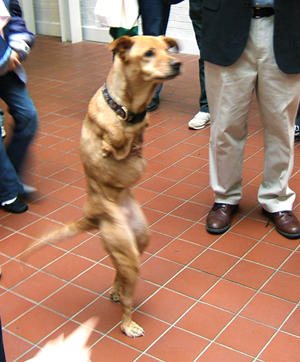
Anyways, why the picture of the dog? That is Faith, the dog who walks on her hind legs! She was a fellow attendee of the book fair, her family wrote a book about her (maybe you caught her on Oprah?). It is hard to believe she actually walks around like a person (I kept thinking of Beatrix Potter books), but she really does. She was born with a birth defect and had to be trained to walk like this so she could survive. Throughout the weekend Faith was walking around the book fair getting all loved up.

You couldn't help but admire her perseverance and sheer determination. Sometimes it feels like getting ahead in publishing is an impossible job. But maybe its not so impossible, you just take it one book fair at a time!

Sunday, November 12, 2006

Things I hate

I'm generally very positive about my job and what I do, even when I'm crazy busy and unmotivated, but since it's rainy and gloomy and I'm feeling in a bit of a funk, I thought I'd focus on the negatives for a change. People always ask me what I like about my job, but rarely ask me what I hate. Well, here is what I hate about my job.

1) I hate rejecting manuscripts. This is probably the hardest part about my job. At the SCBWI Oregon retreat, the other editor there talked about an altered decline letter they have hanging up in the office where instead of "your manuscript" it says "you" so instead of "your manuscript is not satisfying enough" or "After careful consideration, we must pass on your manuscript" it says "YOU are not satisfying enough" or "After careful consideration, we must pass on YOU." It's a reminder to them that there is a person on the other end of the letter, and to that person, to that author, we aren't just rejecting their work, but are rejecting them.

I am aware of this each and every time I say no--I know that I'm stomping on someone's dream. And although years of being in the industry has made me a little more desensitized to this, it's still the number one part of my job that I hate doing. And that leads me to number 2:

2) I hate not being able to sign up everything that I want to work on. Oh, I know that in reality, this is a good thing. If I don't have the support of my publisher, it wouldn't be fair to the author or illustrator or book to publish it. But there have been times where I've been so sure of something, or so passionate about a book, and not being able to work on it kills me. I'm envious of the days where editors had the power to just sign something up on their own. I think in many ways, today's system makes more business sense, but still.

3) I hate being the bearer of bad news. This is related to #1. I don't like letting people down. "We aren't going to do any special marketing for your book" "Your book is out of stock in the warehouse right now" "B&N and Borders aren't taking your book" "Your book got a terrible review" "Your book isn't selling" "There was a mistake printed in your book" "I know you aren't happy with the cover, but we're going to publish it anyway" "The deal for this foreign edition of your book fell through" "We can't give you a higher advance" "Your book is out of print" "The acquisition committee wasn't excited about the project." I get to give people good news, too, but sometimes it feels like it's always bad news I have break to the authors, illustrators, and agents.

4) This is a more minor thing, but I hate writing jacket copy and catalog copy and other kinds of marketing copy. It just doesn't come naturally to me, and I feel like I'm constantly pulling teeth doing it. I'd like to think I'm getting better at it with practice, but I still dread it and always put it off as much as possible.

And now I feel all gross for using the "H" word so much. Kinda dirty. Funny how that is--I was so trained not to say "hate" as a kid. But the good news is that I was trying to make this a list of 10, or even 5, and you know what? I can't think of anything else that I hate about my job right now. Sure, I can think of little annoyances or pet peeves, but overall, this post has put me in a better mood already, because I know the loves outweigh the hates.

Saturday, November 11, 2006

lost tale

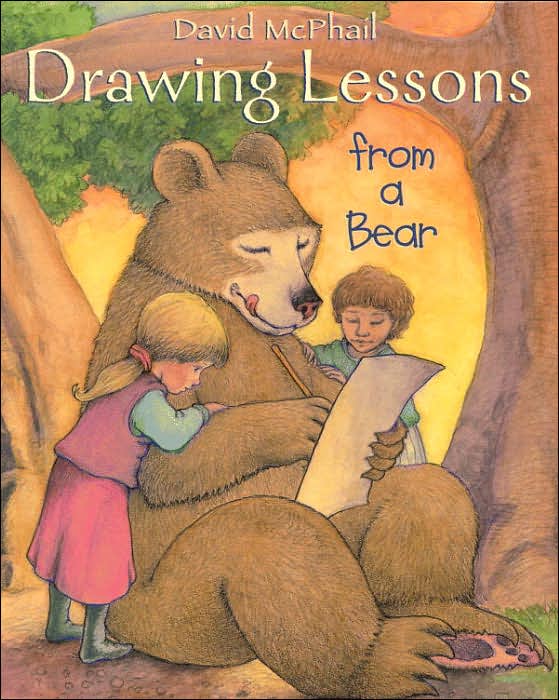
As Elaine said, on Wednesday we were lucky to hear David Mcphail speak. His talk was "off the cuff", very informal but capturing an honesty and candidness that the most prepared speeches can't achieve. I, for one, found myself fascinated.

And,to be honest, a bit saddened and envious. The way he described his life and artistic career seemed so simple and unhindered by the daily rigors that the Blue Rose Girls and I seem to complain about. His picture of the publishing industry when he began so many years ago seems a fairy tale in itself--when one made a book, the publishing company did the rest and the world embraced you with open arms. When the author and illustrator simply authored and illustrated-- without the pressures of marketability and leveled reading and promotional plans. It was the story we all told ourselves when we were in art school.

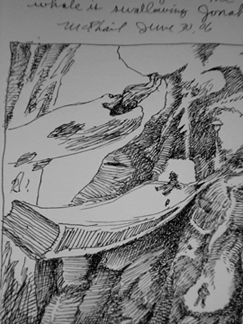
And listening to him speak made me realize how much that tale has gone astray. David has sketchbooks filled with "daily affirmations"-- 1 to 2 hour drawings that he does everyday just for fun. I haven't drawn "just for fun" in years. I can barely get my paying work done in time, much less a personal affirmation. Somewhere between school and life, form and function and theory and practice I feel as if I've lost my way.

Perhaps it's time to draw a map, just for fun.

A NIGHT OUT WITH DAVID MCPHAIL

Phyllis Allen Smith North Shore Council of Massachusetts :
Speaker Series 2006-2007

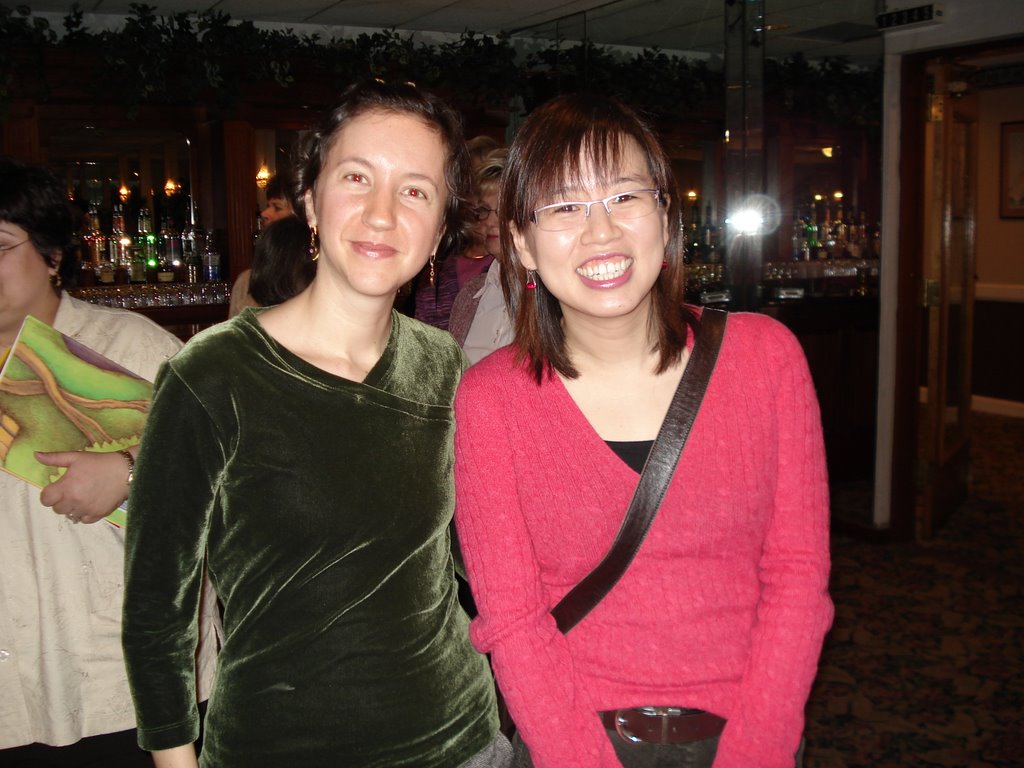
Anna, Grace, and I had a grand evening at the Danversport Yacht Club on November 8th. It was the first event of the 2006-2007 Speaker Series sponsored by the Phyllis Allen Smith North Shore Council. Our council is a local affiliate of the Massachusetts Reading Association and the International Reading Association. This is my second year serving as president of the council. And for the past few years, I have had the pleasure of making all the arrangements for our three annual dinner meetings. This means I get to pick the authors and illustrators who address our membership at these events. Lucky me! Sometimes I feel like a kid in a candy store—okay, Grace, a cupcake store, a cupcake store!


Anna & Grace

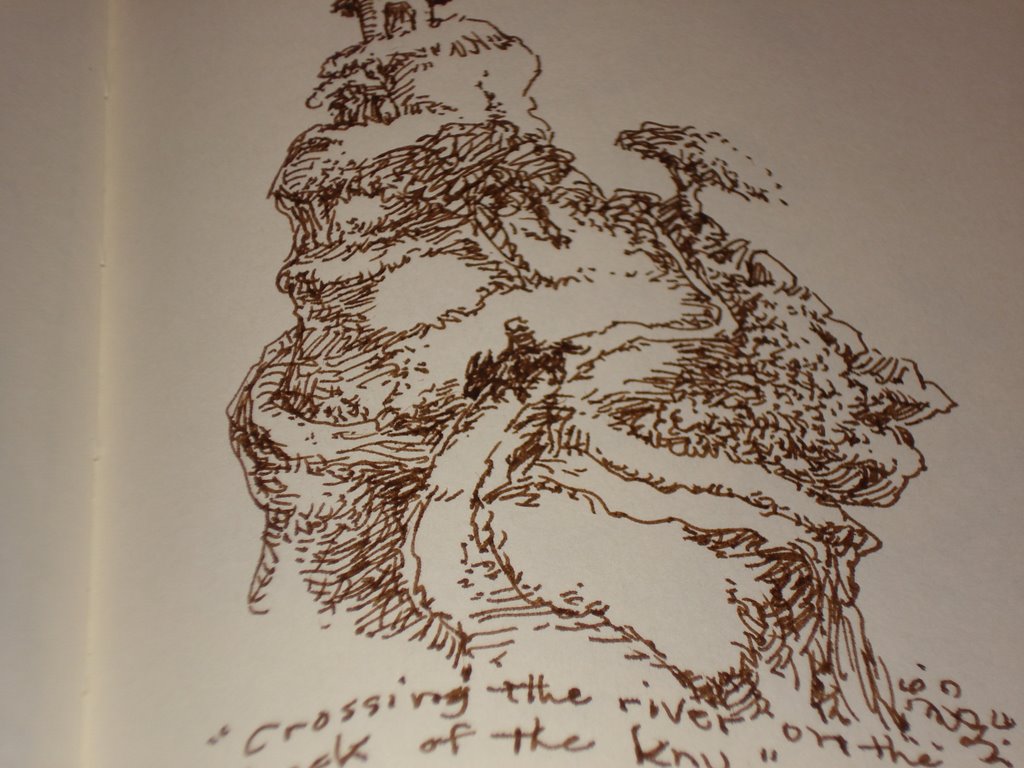
On Wednesday evening, David McPhail, the popular author and illustrator of more than one hundred picture books, was our guest speaker. McPhail is a most delightful and charming man. He is a very entertaining speaker, too. He even drew on overhead transparencies so we in the audience could see how he does his sketches. He showed us the notebooks in which he draws his daily sketches—or, as he calls them, his “daily affirmations.”


One of David McPhail's "Daily Affirmations"

David McPhail is most definitely a man whose passion is drawing and illustrating books for children. We lovers of quality children's books are thankful for that!


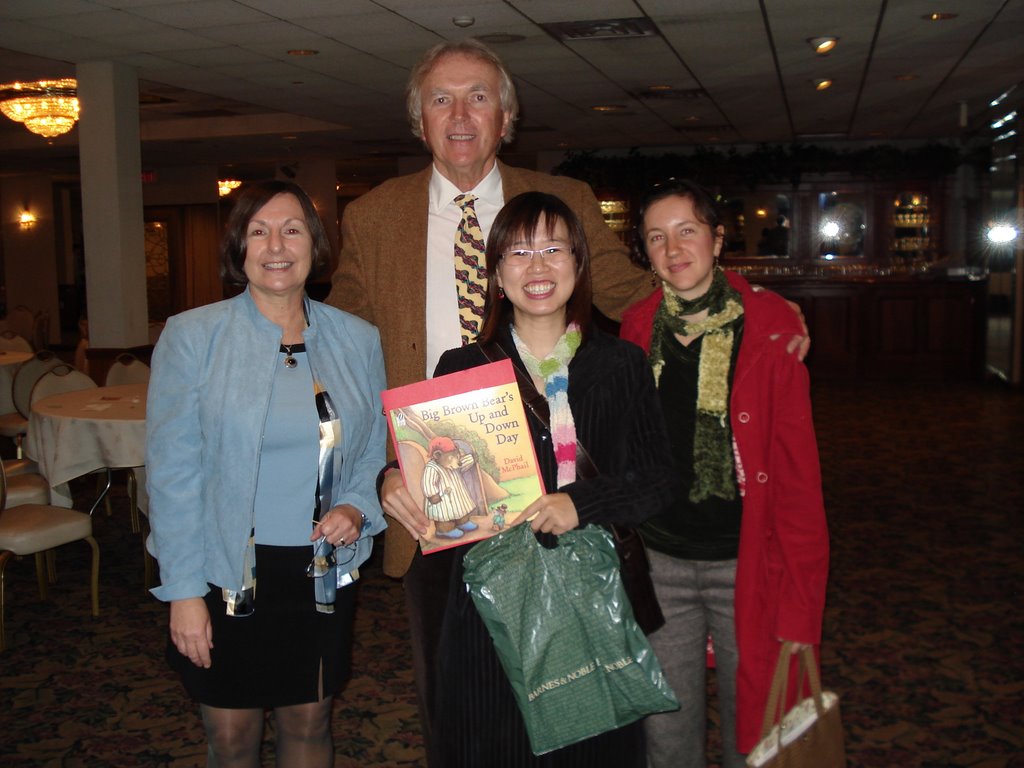
David McPhail & His Groupies

Anna, Grace, and I really aren’t Munchkins! David is VERY tall.


Thanks for a great evening, David!

Friday, November 10, 2006

art critiques

I wrote this as a response about the book Spanky and Rocko but decided to create a new discussion ... if possible!

This is what I said--

"I do have one thing to say upon viewing the SLJ review of this on amazon.(this being the book someone posted a link to) What are those reviewers talking about? He/she said this-- "The illustrations are bland and dully colored" The book clearly looks retro on purpose. That isn't an appropriate criticism for something like that. AAAA! REVIEWERS! They always try to critique art when they don't know art! Stick to what you know folks!

rant over."

Yes, I'm weird, I'm quoting myself....

Anyway, I notice this all the time. Reviewers write very odd critiques of art. They always leave me scratching my head. People who aren't trained in art probably don't know how to properly express themselves when it comes to visuals. I'm not saying ALL people, but a lot. I'm I being snobby?

Artists... non artists...what do you guys think?

meghan

POETRY FRIDAY: Science & Poetry

Last week I wrote about Joyce Sidman, Poet & Scientist. I love her books. I love the way she writes fine poetry and weaves scientific information into it seamlessly. She is not the only poet to have written poems that include scientific information. Other children’s poets, such as Barbara Juster Esbensen, Tony Johnston, Jane Yolen, Marilyn Singer, Kristine O’Connell George, Frank Asch, and others have succeeded at the endeavor, too. Two poets that have done it in humorous verse are Douglas Florian and Judy Sierra. (See Florian’s INSECTLOPEDIA, IN THE SWIM, and LIZARDS FROGS, AND POLLIWOGS and Sierra’s ANTARCTIC ANTICS.)

There are many books of poetry that can be used in the science curriculum. These are poetry collections and anthologies with poems about nature, weather, the seasons, animals, plants, the sea, space, and more.

Here are two of my favorite poetry books that I used to help teach science and to help give my students another perspective to scientific topics that are often taught with a cut-and-dry—the facts, Ma’m, just the facts—kind of approach.


ECHOES FOR THE EYE: POEMS TO CELEBRATE PATTERNS IN NATURE
Written by Barbara Juster Esbensen
Illustrated by Helen K. Davie
Published by HarperCollins

Published in 1996, this book is now out of print. If you can locate a copy sitting on a library shelf or purchase one from a store that sells used books, you will see what an award-winning children’s poet can do to combine science with fine poetry. This book, which is beautifully illustrated by Davie, is divided into five sections: Spirals, Branches, Polygons, Meanders, and Circles. The poems are grouped in this way to help readers see the patterns that are repeated in nature. The Spirals section includes poems about the nautilus shell, galaxies, the cochlea in a human ear, hurricanes, tornadoes, and ferns.


From the Spirals Section:

Uncounted galaxies
send their silver light
unwinding
into
the blackness of space


Above our heads in the night sky
stretches
the Milky Way—
a starry roadway a pinwheel
of stars a
spiral of dusty light…


From the Circles Section:

Circles
set in wood—concentric
a round calendar
Its widening rings grow slowly
out
and out and out
from the old tree’s
earliest day
to the shore of
now


AN OLD SHELL: POEMS OF THE GALAPAGOS
Written by Tony Johnston
Illustrated by Tom Pohrt
Published by Farrar Straus Giroux (1999)

Johnston was inspired to write this collection of poems after her visit to the Galapagos in 1995. The poems tell of an island being born and of the species of plants and animals that the live on this cluster of islands and the waters that surround them—iguanas, the flightless cormorant, Galapagos penguins, long-horned grasshoppers, and the lava cactus. Most of the thirty-four poems in this collection are written in free verse. The book also includes three haikus. There is an Author’s Note at the back with information about the devastation that took place in the Galapagos after the arrival of humans. Johnston also writes briefly about Charles Darwin’s visit there in 1835 and of groups that are trying to preserve this special area of the world. And at the very beginning of the book, there’s a two-page map of the Galapagos Islands.


From the Birth of Fernandina Island

One molten morning
the world
explodes
in sprays of sparks,
plumes of smoke,
gush
of lava,
water,
ash
spitting, spurting,
spewing
from the sea’s crucible
with a great hiss
to make this terrible
barnacle.

Look at Johnston’s use of alliteration in Beetle:

Out of dimness dawns the day.
A beetle creeps over the lava
rubble—
one dark gleam,
one perfect polished pebble
feeling its way along the rim
of morning…

I admire the ways these two poets use language. Their images are fresh; their use of language is inventive. And just think of the enriching vocabulary children are introduced to in these few examples I have provided: concentric, crucible, plumes, spewing. I was able to teach my students so much about language through sharing poetry like this with them. They learned about alliteration, imagery, figurative language, similes and metaphors. They were getting language development right along with science.

As an elementary educator who tried to cover everything I was supposed to teach in every subject every year—I learned that the best way to accomplish this was by integrating different subjects in my units of study. And I know my students benefited from this approach.


Here is a book that nicely integrates science and poetry—and prose and poetry—for very young children.

OUR SEASONS
Written by Grace Lin and Ranida T. McKneally
Illustrated by Grace Lin
Published by Charlesbridge (2006)


In OUR SEASONS, we follow a multicultural group of children named Ki-Ki, Owen, Lily, and Kevin through the year. This book has an attractive layout. Each two-page spread has information about the seasons and weather written by McKneally and a haiku written by Lin. McKneally provides her information in a question and answer format. Her prose is clear and concise. The questions include the following: Why do leaves change color? Why do I see my breath? Why do bees like flowers? Why do fireflies glow?

Lin’s haikus are very child-friendly and would serve as good models for a classroom haiku writing activity. Here are two of her poems:


Ki-Ki sees her breath
She pretends she’s a dragon
Blowing out hot steam.


Lily hears thunder.
“You don’t have to yell!” she calls.
Still the sky grumbles.


I have been an admirer of Grace Lin’s picture book art since I first saw RED IS A DRAGON, since before I met and got to know her. Her illustrations in OUR SEASONS are done in typical Lin style—with a palette of bright colors, with lots of different patterns, and with swirls in the sky. Her exuberant illustrations of children raking leaves, climbing trees, building a snowman, and catching fireflies on a summer night help to unify the poetry and prose. This book is a neat little package that would make a wonderful resource for a kindergarten or primary grade classroom.

Thursday, November 09, 2006

HIDDEN THINGS PART 3.1!

Blogger won't let me post photos so I'm putting this thang on my blog (yes, it's hidden!). I couldn't help but make a few comments.

Look at it now because it won't be lasting in cyber space long! I have a reputation to uphold!

Enjoy...

HIDDEN THINGS


meghan

p.s - If you like it, let me know. If you're disgusted, let me know that too!

Wednesday, November 08, 2006

Cupcake Contest Results!!

Our first Blue Rose Cupcake Contest is over! Thank you all who voted. Our winner is (drum roll please)....

Katherine Tillotson!

Please choose your cupcake flavor from Grace's last post and contact us via your shipping info at bluerosegirls at gmail dot com and then wait anxiously for your 6 delectable cupcakes!

How did Katherine become our lucky winner? Well, Alvina's post "How I edit" won as the most popular post (garnering her the other 6 cupcakes!) and she chose Katherine's name out of a hat.

Bummed you didn't win? Don't worry, there'll be another cupcake contest soon. Just stay tuned!

THE CONTEST THAT WAS OVER AS SOON AS IT BEGAN!

Or...The Blog Contest That Almost Was

Okay! Somebody’s got to alert the publishers of the GUINNESS BOOK OF WORLD RECORDS for me. I have a new entry for their next edition: Shortest Blog Contest in History.

Yep! I really know how to come up with an idea for a blog contest, don’t I? I post my contest question—and within seconds some Googler comes up with the correct answer!

Check out my contest question:
Win a Children's Poetry Book!

So much for my first attempt at a blog contest! Are there any self-help groups or books you know about that could provide some good advice to an inept blog contest runner like me? Please let me know. I can’t go on like this. What will all the other sponsors of blog contests think of me? I will become known as “The Pariah of Blog Contests.” People will begin making snide remarks about me. They’ll start calling my contests “Speed of Light Competitions.” You know—the answers are posted as soon as the question appears. The speed of light’s pretty fast—186,000 miles per second! I can’t keep up with that kind of celerity. Please tell me I’m not doomed to be a failure at this endeavor of blogging contests.

But seriously, folks, I had more than a contest in mind when I posted my “Win a Children’s Poetry Book” contest today. Actually, I was trying to heighten people’s awareness of the National Council of Teachers of English Award for Excellence in Poetry for Children. So few people I have met have heard of this award. All elementary school teachers and librarians should know the names of the poets on this list.

Why should they know them? Funny you should ask me. Let me just say that these poets, some of whom have passed away in the last two decades, are the best of the best of children’s poets. Look for their names in the indices of children’s poetry anthologies. Buy their poetry books—at least those that are still in print. Share their poems with children. Encourage kids to read their poetry books.

Go visit this page of the NCTE Poetry Award Site for profiles of these outstanding poets and for a printable list of their names.

P. S. Let me know if any of these award-winning poets wrote a children’s poetry book that happens to be a favorite of yours. I just might have another poetry book to give away!

HIDDEN THINGS PART THREE!

I'm not going to make any comments this time. I'll let you look at the pictures. This is from a book called Rocko and SPANKY go to a Party. They are sock MONKEYS. I must also add that I love Ugly Fish, also by the same author (illustrated by someone else). It's a risky book but I love it.

Okay, once again Blogger won't let me post pictures. Come ON BLOGGER!

Stay tuned. Pehaps later today I can post them.

meghan

long live children's books

WIN A CHILDREN'S POETRY BOOK!

Would you like to win a children's poetry book?
Of course, you would!
This is all you have to do to win a children's poetry book: Be the first person to answer the question printed in red correctly.

Read the list of years and names printed below.

Do you know the significance of this list?

1977—David McCord
1978—Aileen Fisher
1979—Karla Kuskin
1980—Myra Cohn Livingston
1981—Eve Merriam
1982—John Ciardi
1985—Lilian Moore
1988—Arnold Adoff
1991—Valerie Worth
1994—Barbara Juster Esbensen
1997—Eloise Greenfield
2000—X. J. Kennedy
2003—Mary Ann Hoberman
2006—Nikki Grimes

Submit your answer in the comments to this post.

Remember...in order to win a children's poetry book, you have to be the first person to answer the question correctly.

Monday, November 06, 2006

Marathon and drinks

Hey all,

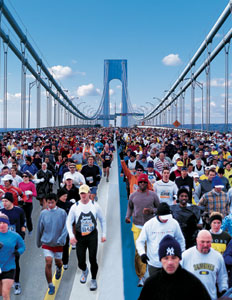
As Libby mentioned, I ran in the NYC marathon yesterday, and I just posted a wrap-up of the experience on my personal blog.

Meghan and I will both be at the Kidlit Drink Night tonight at Sweet and Vicious, so come on out and help me celebrate!

Sunday, November 05, 2006

contest ends today!

It's your last chance! Our Cupcake Contest ends today, so VOTE!!!

Right now I am thinking of giving the lucky winner a cupcake choice of:

chocolate with peppermint frosting
carrot cake with cream cheese frosting
coconut with white chocolate buttercream frosting
gingerbread with candied ginger frosting

don't those sound good? If you get your vote in on Monday morning, I won't tell.

back from DC

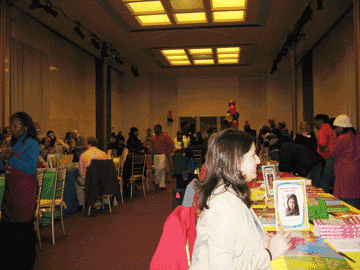
Well, I was in Washington DC this weekend for the Multicultural Children’s Book Fair at the Kennedy Center. I'm not exactly sure who runs it (I think Target is a sponsor) but kudos to whomever is in charge. Right from the get-go, when the authors sat down at 12, people were bursting at the doors to come in. It was BUSY, even though heavyweight talents like Walter Dean Myers, Nikki Grimes and Karen Katz were there--everyone was signing for 5 hours straight. Even l'il old me! The only bad thing was that I didn't really get to really make too many new acquaintances; and I forgot to take pictures until the last 15 minutes. Sorry! Here's what I got:

This is the author signing room. You can see we are two long rows of authors, which is what makes the constant flow even more amazing. This is the quietest it was the whole time because the festival is about 8 minutes to being over.


The only author I really got to talk to was the beautiful Pooja Makhijani, who's book Mama's Saris is just as lovely as the author. Can I tell you how jealous I am of her author photo? She's offered to pass on the name of her photographer. I'll, of course, take her up on that, but methinks I will not have such nice results. Sure, sure fine feathers and all but it helps when the bird is is not a turkey.

And here's me. I'm not sure why the non-reflection lens of my glasses reflect so much, but I suppose it can't be helped. And I didn't realize my v-neck sweater was so deep a V. Hope I didn't scandalize any little kids out there.

Go Alvina!


Alvina is running and has posted all about it on her personal blog

--and we can and should delete this post tomorrow.....but if anyone wants to watch her today, you can track indivividual runners here (supposedly). It takes the page so long to load that I haven't seen anything yet -- if you see her, tell us!

POST FESTIVAL FESTIVITIES

KEENE STATE COLLEGE POST FESTIVAL FEST


Anna and I had a great time at the Keene State College Children’s Literature Festival on October 28th. It was a capacity crowd. There were 450 people who came from twelve different states and from as far away as Missouri and Texas to attend this popular event.

Anna did a fine write-up of the festival last week. Unfortunately, Anna and I never got around to taking pictures. We were too busy talking, eating food, and buying books during the lunch break and during the reception following the announcement of the speakers for the 2007 Festival: Michael Dooling, Natalie Kinsey-Warnock, Raymond Bial, Chris Soentpiet, and Richard Peck. (Chris Soentpiet was a speaker at the festival a few years back. He enjoyed the experience so much that he asked David White, the festival director, if he could return.)

Now here’s the scoop on some other stuff:
Dinner with the authors and illustrators at Keene State that Saturday night was a wonderful affair with great company, fine wine, and delicious food—including prime rib, baked stuffed shrimp, baked stuffed portabella mushrooms, and a luscious three-mousse parfait. Anna and I sat at the table with Kevin Hawkes. We enjoyed our conversation with Kevin, Kathy Mallat (another member of the festival advisory board who is also a children’s book author and illustrator), and others.


I love the books Kevin Hawkes illustrates: WESLANDIA; MY LITTLE SISTER ATE ONE HARE; THE MAN WHO MADE TIME TRAVEL; THE LIBRARIAN WHO MEASURED THE EARTH; HANDEL, WHO KNEW WHAT HE LIKED; and so many more. I bought his new book LIBRARY LION, which was written by Michelle Knudsen. How could I resist a picture book with a title like that? It’s a great read.


After we finished eating, the speakers and other dinner guests headed off to David White’s Irish cottage. Yes, his Irish cottage! I kid you not. David loves all things Irish. So…he built an authentic Emerald Isle cottage with whitewashed walls and no running water smack dab in the middle of the Monadnock Region of New Hampshire. Step over the little wooden bridge and across the threshold of the cottage—and you are definitely in another world. At one end of the one-room cottage, there’s little pub with Guinness on draft. Really! If you don’t believe me, ask Anna. She never lies or exaggerates.

Gathered at the cottage was a convivial crowd of people with a common interest in children’s literature—as well as Guinness on draft and Irish whiskey. There was a wealth of chatter and laughter that rose to the wooden rafters of the cottage. What a pleasurable way for Anna and me to cap off our experience at the Keene State College Children’s Literature Festival.

I did not imbibe any alcoholic beverages at the cottage. I had already had two glasses of wine with dinner. And I was the designated driver. Route 101 east of Keene is a winding road—and at night it is very, very dark. I had to be awake and to have my wits about me to ensure us a safe drive back home to Massachusetts.

Anna and I hope more of the Blue Rose Girls will be able to attend the festival in 2007. As a member of the festival advisory board, I encourage anyone who lives in the Northeast to think about attending next year. Put the date on your calendar: October 27, 2007.


NOTE: Each year David White asks a children's illustrator to design a poster for the Keene State College Children's Literature Festival. Here is the 2006 poster created by Olivier Dunrea. Every attendee gets to take home a festival poster.

Saturday, November 04, 2006

POETRY SATURDAY: Joyce Sidman, Part II

POET AND SCIENTIST


There are two earlier poetry collections written by Joyce Sidman. I am sorry to say that JUST US TWO: POEMS ABOUT ANIMAL DADS (2000) is out of print. (Fortunately, I was able to acquire new copies from an online bookseller—at a very good price.) It’s a novel idea: a book of poems that explains how some animal fathers care for their young. Here again, Sidman varies her style and her use of poetic forms. The collection includes Mouse Haiku, a lovely poem written in three haiku stanzas, and If I Were an Egg, a concrete poem about the emperor penguin written in the shape of an egg. Egg Business, a fast-paced humorous poem, is told in the voice of a daddy giant water bug.


Here is the first stanza of Mouse Haiku:

Blind and tissue-skinned,
tiny mice enter the world
in a nest of grass.


From Egg Business

Busy, busy:
I’ve got eggs.
Real tight schedule:
I’ve got eggs.
Up at dawn
to clean the eggs.
Deep-knee bends
to rinse the eggs.
Swim up top
to warm the eggs.
Dive down fast
to hide the eggs.
Sit in sun
to dry the eggs.
Life is tough
when you’ve got eggs…

In the back matter, Sidman includes factual information about ostriches, poison-arrow frogs, peregrine falcons, and other animals that are the subjects of her poems. Susan Swan created the book’s colorful three-dimensional cut-paper illustrations.


EUREKA!: POEMS ABOUT INVENTORS (2002) is a poetry book that might appeal to kids—grades four and up—who have an avid interest in science and inventions. The book’s narrative poems are written in free verse. Many of them are also persona poems told in the voice of the inventors and discoverers who are the subjects of the poems. These subjects include Johann Gutenberg, Leonardo da Vinci, George de Mestral of Velcro fame, and Ts’ai Lun who developed the method for making true paper nearly one thousand years ago. The book takes us through time from the prehistoric discovery of clay to the invention of the World Wide Web in 1991. There’s a humorous poem entitled Ode to Spode about Josephine Cochrane, inventor of the first dishwasher—and even a poem about the woman who invented the bra. (Three cheers for Mary Crosby’s biggest supporters!) And let’s not forget Food for the Gods about the man who created the first chocolate bar. (He’s my hero!) In The Light—Ah! The Light, Madame Curie tells about the obstacles and hardships she faced in her lifetime. It is a powerful piece.


From The Light—Ah! The Light

For the subject of my doctorate,
I chose uranium.
Just a lump of stone—but it shone!
The work was brutal:
a ton of ore to be hauled, cracked, incinerated
for one pure gram of radium.
I kept a bowl of it at my bedside
so I could wake at night
to see its fairy glow.

In the end,
that glow ravaged my skin,
poisoned my blood.
I was like the shell of a burned-out tree.
But what of it?
I, Manya,
the poor Polish girl from Warsaw,
pried open life’s hidden heart
and discovered the bright burn
of its decay.

This collection is divided into sections: The Tapestry of the Past, The Age of Invention, A Light Interlude, and Dawn of the Modern Age. As she does in many of her books, Sidman includes additional information about the inventors and discoverers at the end of each section. This book is finely illustrated by K. Bennett Chavez. Eureka! is an excellent classroom resource. There is more than poetry and science information contained between the covers of this book—there is history, too.

Suggestion: Have children write biography poems about famous people they have read about instead of requiring the typical assignment of writing book reports about the biographies they read. It might generate a little more enthusiasm and creativity. Sidman’s fine poems can serve as examples and inspiration for your students.


Sidman’s MEOW RUFF: A STORY IN CONCRETE POETRY (2006) is written for a younger audience and is a departure from her other works. It’s an innovative, charming story of a budding friendship between two natural enemies that’s told in concrete poetry. When a lightning storm rolls in, a cat and a dog take shelter from the rain beneath a picnic table, huddle together for safety and warmth, and form an attachment. Michelle Berg’s illustrations, created in Adobe Photoshop and Adobe Illustrator, are eye-catching and work wonderfully with the text. I have just one criticism: Some of the text is difficult to read. Still, this is a neat book and a good way to introduce children to this form of poetry. It is also unique. I can’t recall ever reading a story for children written in concrete poetry.

Millbrook* was the publisher of JUST US TWO and EUREKA! Houghton Mifflin is the publisher of the other four books. Three cheers for the editor(s) at Millbrook who had the insight to accept the talented Sidman’s first two poetry manuscripts for publication! And three more cheers for Houghton Mifflin!
(*Millbrook was bought by Lerner who now markets EUREKA!)

Visit Joyce Sidman’s website where you will find the following:

  • A Poetry Now challenge
  • Poetry Starters
  • Tips for writers
  • Teacher's guides for her books
  • Excerpts from her poetry books
  • Pictures of Merlin and her new dog Watson

Joyce Sidman’s next book will be published in spring 2007. It is entitled THIS IS JUST TO SAY: POEMS OF APOLOGY AND FORGIVENESS. It contains a series of poems written by a fictitious class of 6th graders. The poems are modeled on the famous poem by William Carlos Williams.

Happy Poetry Saturday!


Friday, November 03, 2006

Contest ending soon!!!

Voting for our Cupcake Contest ends Sunday, so vote today!

THE MESS IN MY BRAIN

I missed my post on Thursday because I'm in crisis mode. My laptop broke and the hard-drive needs to be erased. AAAAA!!!!!! EVERYTHING is on that thing. I was in a hurry and tripped over the power cord and down it came.

I'm also still working on two books. All if this is making me C-R-A-Z-Y. I've lost my keys, my book contracts (blowing down some NY street), I got a flat tire on the FDR, the apartment didn't have water yesterday and more fun things. I can't find my shoes or my socks or my pens and my apartment reflects the mess in my brain. I TRIED just now to vacuum the floor and blew a fuse. Now most of the apartment doesn't have electricity. Wonderful. I have to take a shower and go to RH and then work. I guess I'll be showering in the dark!

The artwork I turn in also reflects the mess in my brain. This is what the corners of my paintings look like... Okay, my old computer with the old browser won't let me post pictures. Super. Just imagine it looks like a big mess (paint splotches everywhere).

Lastly, stay tuned for my next HIDDEN THINGS post. I will post tomorrow when I check the book out. You don't want to miss it!

meghan
p.s - if I don't post it means I've checked myself into a mental hospital

POETRY FRIDAY: Joyce Sidman, Part I

POET & SCIENTIST


Joyce Sidman is fast establishing an excellent name for herself as a children’s poet. Sidman’s SONG OF THE WATER BOATMAN & OTHER POND POEMS was one of the most notable children’s books published in 2005. It is truly the work of a master poet. It is also the work of an individual who is a careful observer of nature, a person who is a scientist of the heart. It deservedly received a multitude of accolades, including the Lee Bennett Hopkins Poetry Award. This collection includes poems about spring peepers, wood ducks, green darners, duckweed, the water boatman—and more. This is not just a poetry book—this is as beautiful a science book as you will ever find.

Look at how Sidman uses repetition to its best advantage in the following two stanzas of her poem about spring peepers:

From Listen for Me

Listen for me on a spring night,
on a wet night,
on a rainy night.
Listen for me on a still night,
for in the night, I sing.

That is when my heart thaws,
my skin thaws,
my hunger thaws.
That is when the world thaws,
and the air begins to ring.

There’s no doubt that the beautiful woodblock and watercolor illustrations by Beckie Prange add to the appeal of this book. But Sidman’s fine poetry and prose, which inform readers about the flora and fauna that inhabit a pond, are topnotch and every bit a match for Prange’s art. (Prange won a Caldecott Honor for SONG OF THE WATER BOATMAN.) This is a great book to use across the curriculum in connecting science and poetry.

SONG OF THE WATER BOATMAN is an outstanding book. I thought if any book of poetry deserved a nod from a Newbery committee—this was the one. But it was not to be. Fortunately, the book did receive many other accolades. Take a look at the honors and awards conferred on it:

SONG OF THE WATER BOATMAN: Honors and Awards


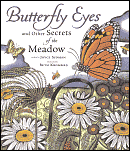
Sidman’s most recent collection, BUTTERFLY EYES AND OTHER SECRETS OF THE MEADOW, is a masterful follow-up to SONG OF THE WATER BOATMAN. Its poems and prose open OUR eyes to the world of the meadow. Topics of the poems include grasshoppers, snakes, hawks, butterflies, and dew. All the poems are riddles. One riddle is a concrete poem that takes shape as a toad. Two other poems are written as letters. We Are Waiting is a pantoum, a poetic form composed of quatrains in which the second and fourth lines of one quatrain are repeated as the first and third lines of the following quatrain. That’s not an easy poem to write.

Here is an excerpt from one of my favorite poems in the book.

From Bubble Song

Beautiful bubbles
bubbles of pearl,
all in a clustery, bubbly swirl
Bubbles I blow
from my own bubble-spout
(I’ll never
I’ll never
I’ll never come out!)

Beautiful bubbles
bubbles of foam
Bubbly castle,
snug bubble-home
keeps my skin tender
saves me from drought
(I’ll never
I’ll never
I’ll never come out!)

This is a mask poem. Who is speaking? Remember…it’s a riddle. The reader is expected to take clues from the text of Sidman’s poem and from the illustration by Beth Krommes…and maybe—just maybe—deduce that Bubble Song is the song of a spittlebug. And if the reader is clueless, that’s fine. On the following two-page spread, Sidman gives us the answer to the riddle and a paragraph of prose in which she provides further information about the spittlebug.

In BUTTERFLY EYES, Joyce Sidman displays her deft touch in using a particular style or form of poem to suit its subject. This is a collection of finely honed writing. Krommes’ scratchboard illustrations are striking in their depiction of the beauty of the meadow. They also provide us with some close-up views of the little inhabitants that often go unnoticed therein.

Recommend this book to budding naturalists. Recommend this book to teachers for use in the science curriculum. Recommend this book to a poetry lover. Aw heck! Recommend this book to everyone. It’s a comer!!!


THE WORLD ACCORDING TO DOG: POEMS AND TEEN VOICES, which was published in 2003, is a fine collection of poetry and prose. Sidman’s poems speak mostly of the ways dogs embed their presence in our lives. Her dog Merlin (1994-2004) was the inspiration for this book in which she uses a variety of forms, including haiku and a poem for two voices. Along with Sidman’s poems, there are short essays written by young people about their dogs that are touching and sincere. This may be just the kind of poetry collection that would appeal to middle school and older students who insist they don’t like poetry—especially if they are dog lovers.

Here is a haiku from the book:


Awakening

I dream of deep-sea
fishing: awake to find dog
breathing in my face.


From Honey, Cream, and Licorice

In the neighborhood park,
far away from it all
yet somehow smack
in the heart of things,

a trio of dogs lick noses.
One, the color of cream,
another of honey,
the third a deep black licorice.

Three dogs
in the spring sun,
licking noses. Briefly
this tottering world
rights itself.


Please come back on Saturday for Part II of Joyce Sidman, Poet and Scientist.

Thursday, November 02, 2006

Guess which pumpkin is mine!

This isn't really a contest, but I'm sad that more people aren't guessing which pumpkin is mine. So go over to my blog and guess. I'm curious to see what kind of pumpkin you think I'd carve.

Wednesday, November 01, 2006

HIDDEN THINGS PART 2

Here comes part two. I will admit that I feel a bit like I shouldn’t do this... but I'm forging bravely on! I thought I'd spice this blog up a bit.

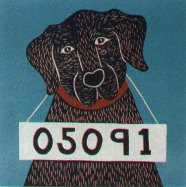
The first contender for things hidden in the artwork is the SALLY books. You know, the cute books about the dog.

I will now reveal to you all the kinds of things many booksellers talk about and breed while at work.

Look at the nose of this dog very carefully. Does it look like something else?


Please know that I did NOT discover this first and this is NOT what I do as a bookseller! However, once you see it you'll never see those Sally books the same way again!

Stay tuned for the second book on my list. The things hidden in this book coming up, in my opinion, HAD to have been done on purpose, but I think it'll be fun to discuss.

Please don't hate me for ruining children's books for all of you!

TO THE MOON AND MARS

HAVING THE FIRST WORDS


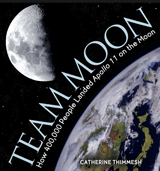
Guess what FedEx left at my house yesterday? Need a clue? Just want me to tell you the answer? Okay…TEAM MOON: HOW 400,000 PEOPLE LANDED APOLLO 11 ON THE MOON—and it was inscribed by the author, Catherine Thimmesh. It was my prize for submitting the funniest entry in Book Buds “Famous First Words” contest. Anne Boles Levy asked contestants to come up with the words we thought an astronaut would exclaim when stepping foot on Mars for the very first time.


I suppose you’d like to read my snarky entry:

The sky is pink.
The rocks are red.
There ain’t no birdies
Overhead.

It’s bare. It’s bleak.
Don’t see no plants…
Or other green
Inhabitants.


It’s desolate.
The air is scant.
Except for me—
No life’s extant.


It’s dusty, dry.
I need a beer.
Houston,
Get me outta here!


I actually entered two poems—but Anne liked this one better than my parody of Stopping by Woods on a Snowy Evening.

A LOQUACIOUS ASTRONAUT WAXES POETIC AFTER STEPPING FOOT ON MARS

Whose planet’s this? I know I know.
His home’s on Mount Olympus so
He will not see me stopping here
To go exploring to and fro.

The polar ice cap’s very near.
I spy three skaters. Drat! I fear
Some other life forms came before.
I’m NOT the first Mars pioneer.


I see a Super Star Trek Store…
And garish neon signs galore!
There’s garbage everywhere I tread.
Don’t want to be here anymore.

This trip’s a bust to “Planet Red.”
Yo, Earth, give me the go-ahead
To visit Jupiter instead,
To visit Jupiter instead.


Now…back to the MOON! Figuratively, that is, not literally. In addition to being a poetry geek, I am also an astronomy buff. TEAM MOON is my kind of book. Even a young child who can’t yet read could get lost in this book just looking at the amazing photographs. (I know a young grandnephew who is going to get a copy of TEAM MOON for his birthday in two weeks. He’s an astronomy buff like me.)

I wrote Anne yesterday to tell her I had received my prize. I also said I just might have to write another poem for the occasion. But…I have sooooo many old moldering poems in my files that I was able to pull this one out to post today. The following poem is now dedicated to Anne and Catherine Thimmesh.


MARY HAD A LITTLE MOON
(Another old moldering poem by Elaine Magliaro)

Mary had a little moon.
It shone just like a star.
And everywhere that Mary went
She brought it in a jar.

She sneaked it into class one day,
Which was against the rule—
But teacher smiled because it was
The brightest thing in school.


Extra! Extra! Read all about it! Don’t forget the CUPCAKE CONTEST. Remember, the rules were changed. Read the small print at the bottom of the contest post.

Fat

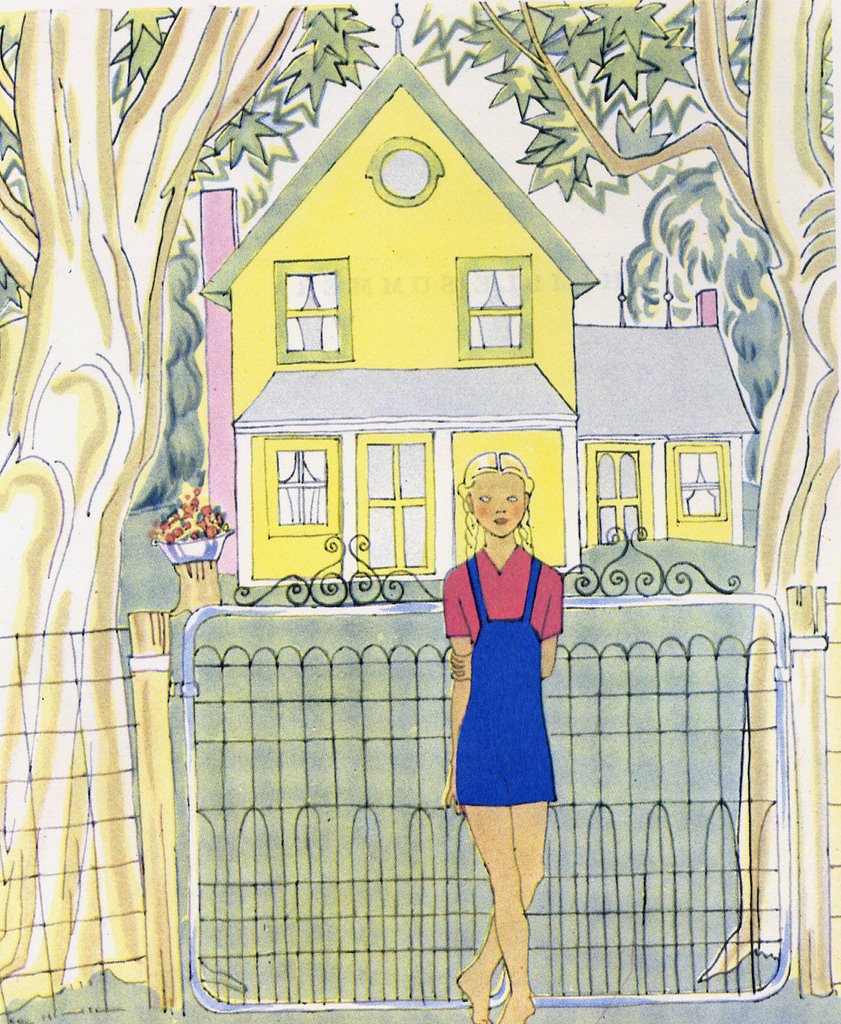
When I was a child and a teenager, I would read almost anything: just gulp it down and the fatter, the better (picture books were thin books, chapter books were fat books to us). Now I’m much pickier – but last week I had the flu for a few days and I read the way I read as a kid when I couldn’t go outside: I just put a big stack of fat books next to me and when I finished one, started the next. One of the books I read was Thimble Summer by Elizabeth Enright (Newbery winner, 1938). It opened to this:


--and my first thought was: the author must be the illustrator (she was). I kind of like the drawings in this book – they’re just so bizarre. And I also always liked Arthur Ransome’s drawings for Swallows and Amazons, which was published in the 1930s, too. They’re charming and suit the books.

I’m guessing that these authors weren’t ever professional illustrators (girls, what do you think?). And do you think authors this amateurish could get away with illustrating their own chapter books today? I hope it’s possible, even if the illustrations aren’t up to Grace’s charming drawings in the equally charming Year of the Dog, it’s just FUN to find colorful illustrations like these scattered throughout a book, especially when the author is the illustrator:

The girl on the left is described as fat -- I’ve never seen the word “fat” mentioned so often in a book as it was in Thimble Summer. People were also described as “fleshy,” as when someone says, “They are one fleshy family.” I didn’t know people were that preoccupied with weight in the 1930s – or was it just this author? Pigs were mentioned a lot, too – one is described as “unusually greedy and selfish, even for a pig.” This isn’t a criticism, I enjoyed the book; I just found this sort of thing unusual:
“Garnet watched Mrs. Hauser [the mother in the “fleshy family”] get into the car. Did she imagine it, or did she really see the Ford sink down a little on its springs, as if it sighed under a great weight.”


That made me laugh, though I was half-relieved and half-disappointed to see that this character’s daughter, also described as “fat,” was the perfectly normal-looking girl with a bob above. Fuse8 worried in her review that children, seeing this, would think that THEY were fat and be troubled; I am not. I weigh a lot more than I once did and already think I'm fat. When I saw this picture, I was reassured. I thought, "Oh, fat doesn't look so bad." Maybe it really doesn't!